Luang Prabang
UNESCO-listed old royal capital
Own a stay, café or cab? List your place on BuzzyTrip — free starter listing after we review.
List your placeSlow, green and deeply Buddhist. Late October brings Boun Ok Phansa and boat races; the railway now links Vientiane, Vang Vieng and Luang Prabang in hours.

UNESCO-listed old royal capital
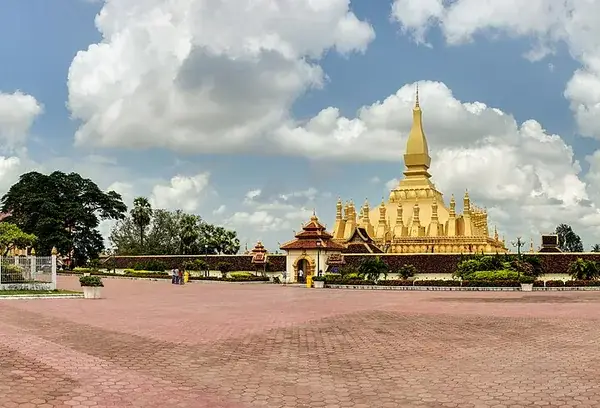
Vientiane’s golden national symbol
Karst, rivers and caves
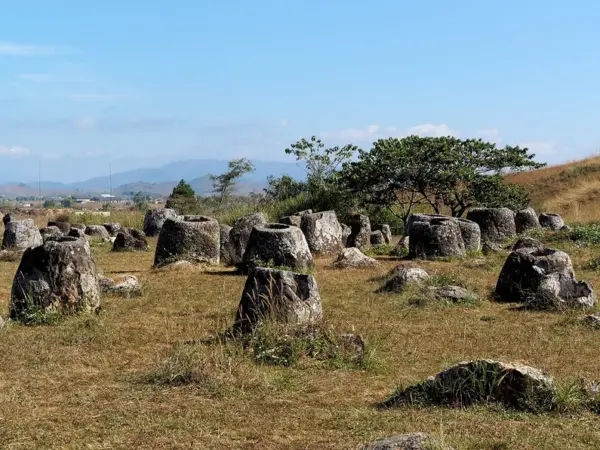
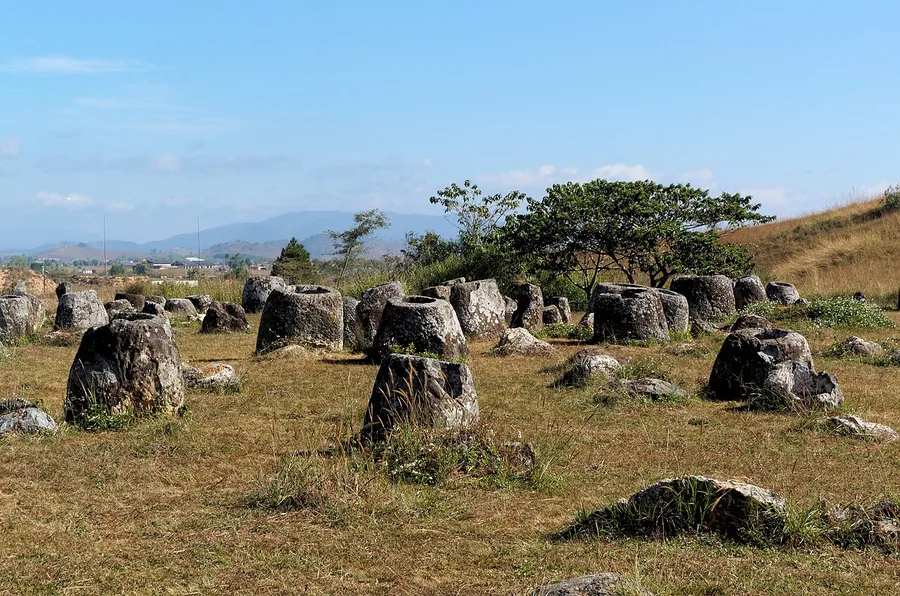
Iron Age stone jars, UNESCO site
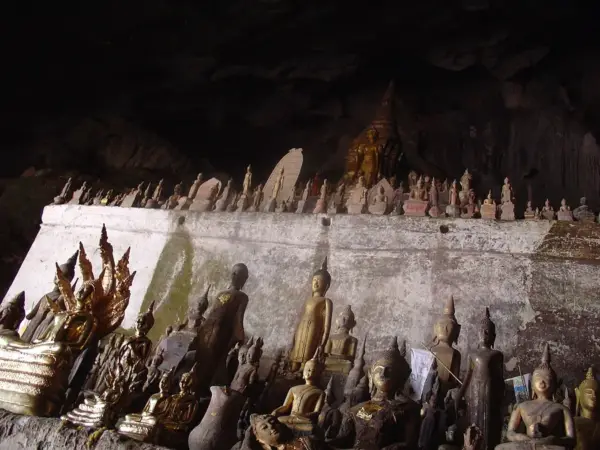
Buddha-filled caves above the Mekong
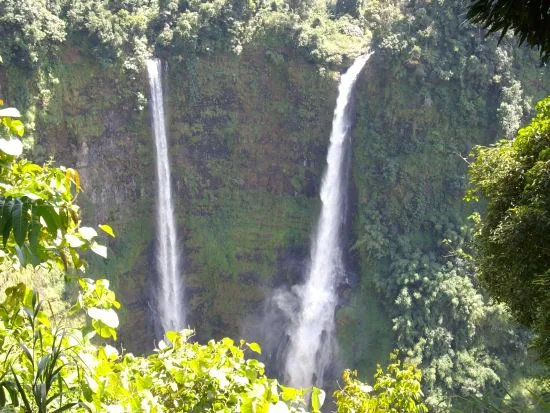
Coffee farms and waterfalls
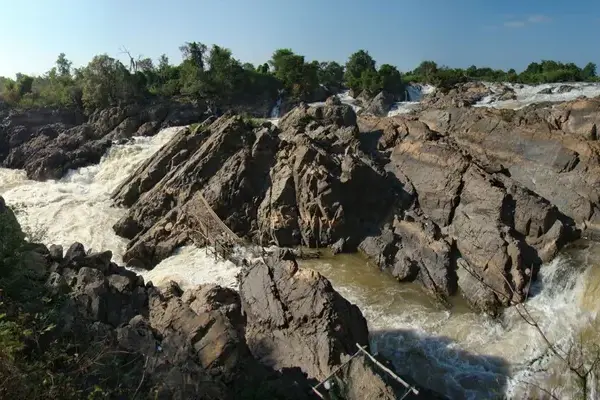
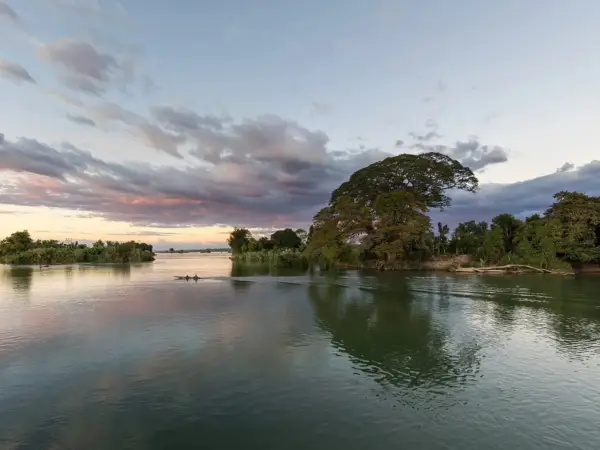
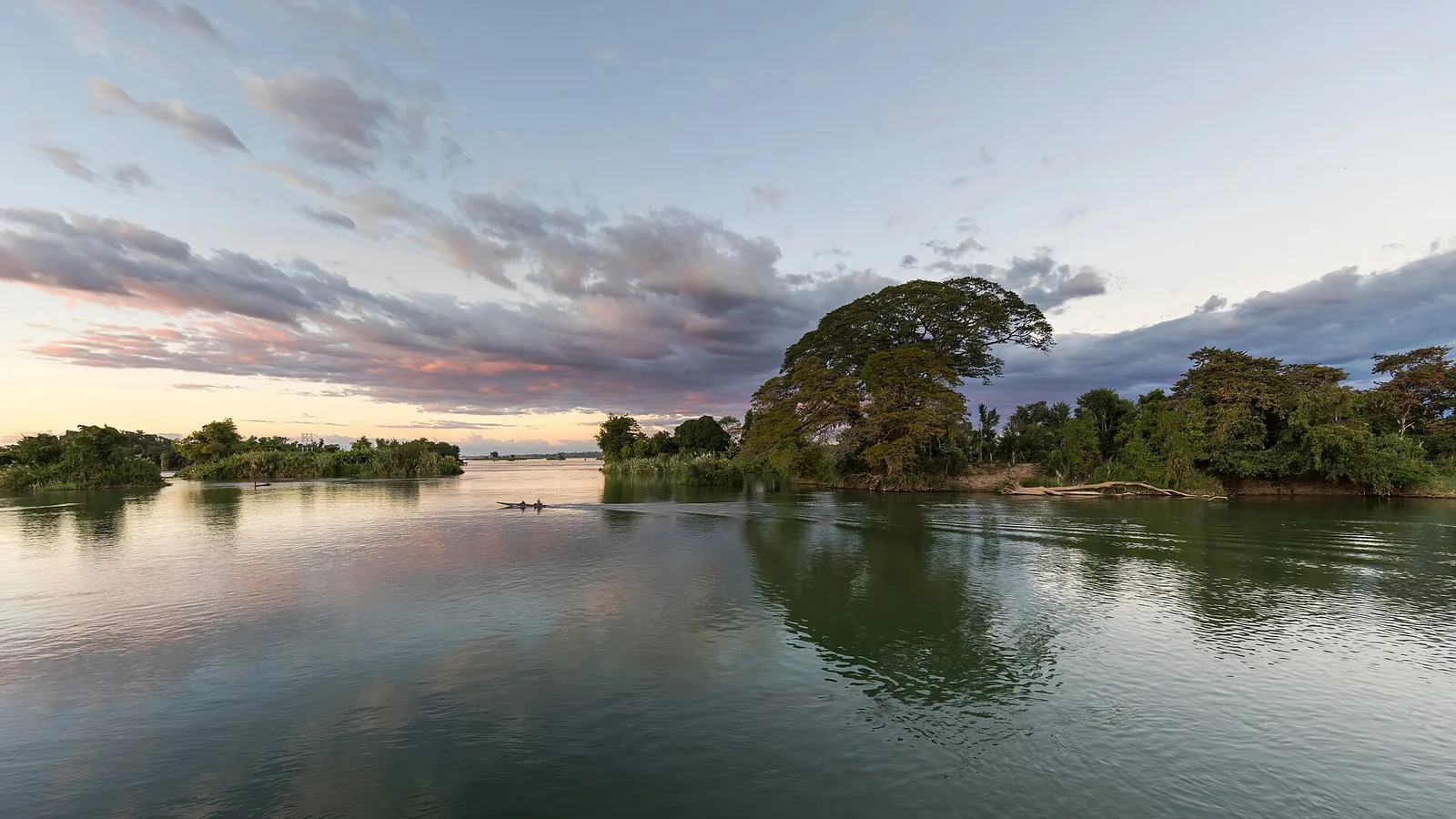
Mekong river islands
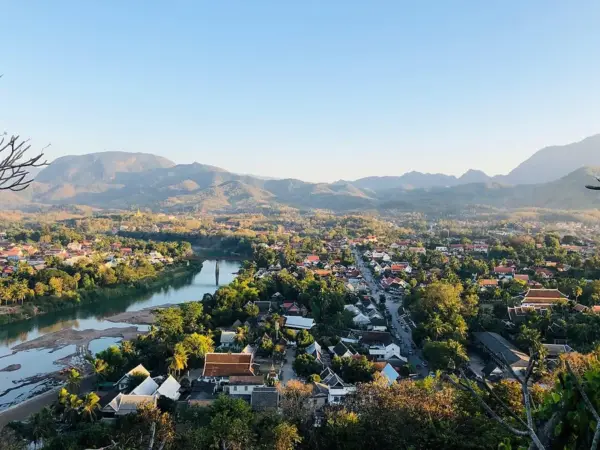
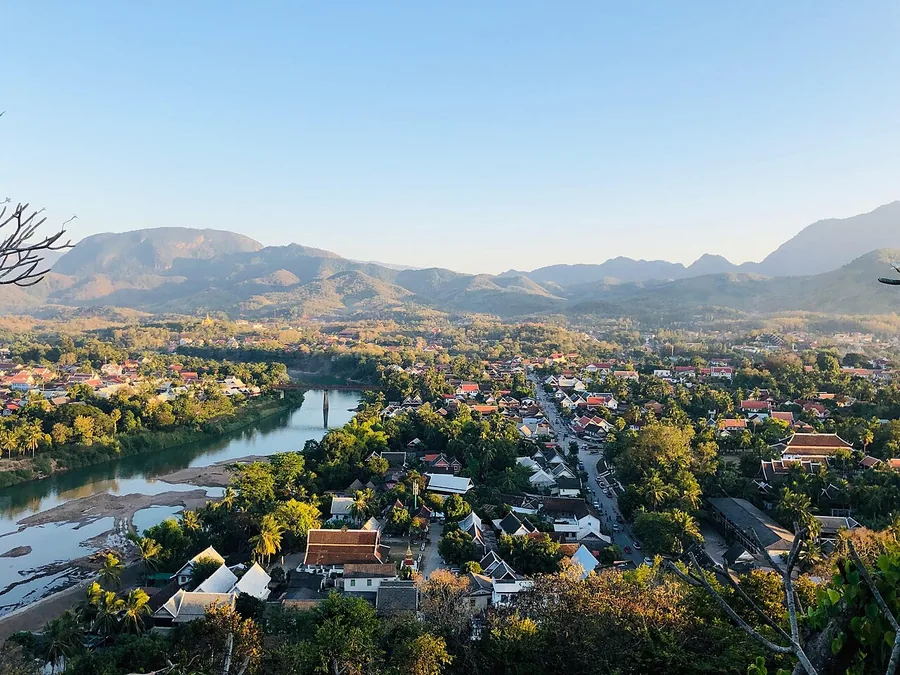
Sunset over Luang Prabang and the Mekong
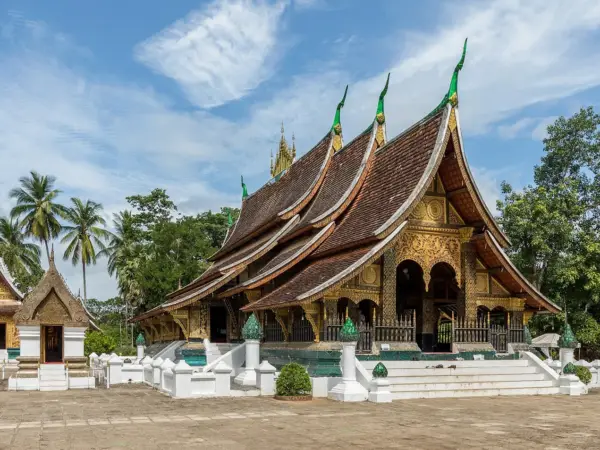
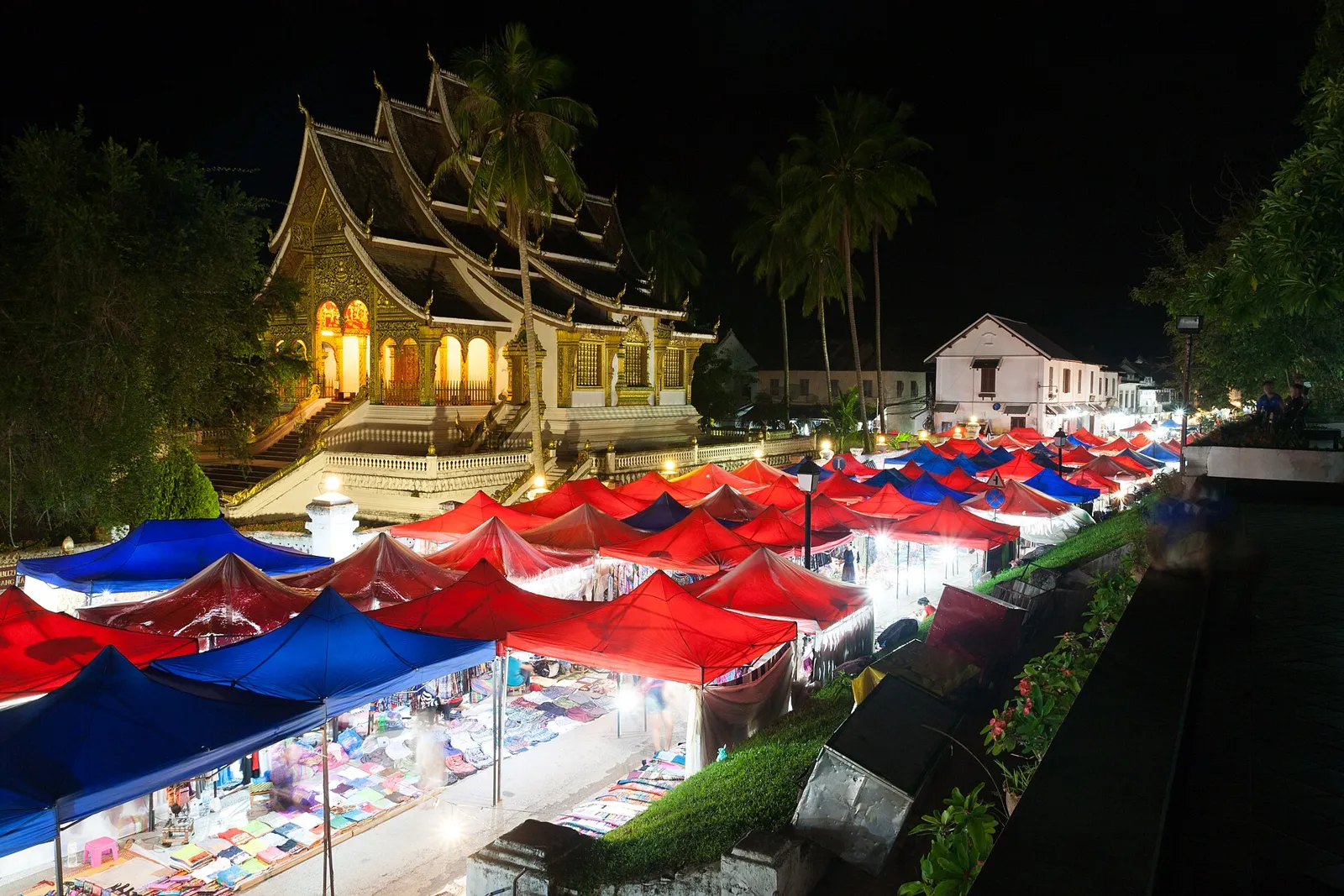
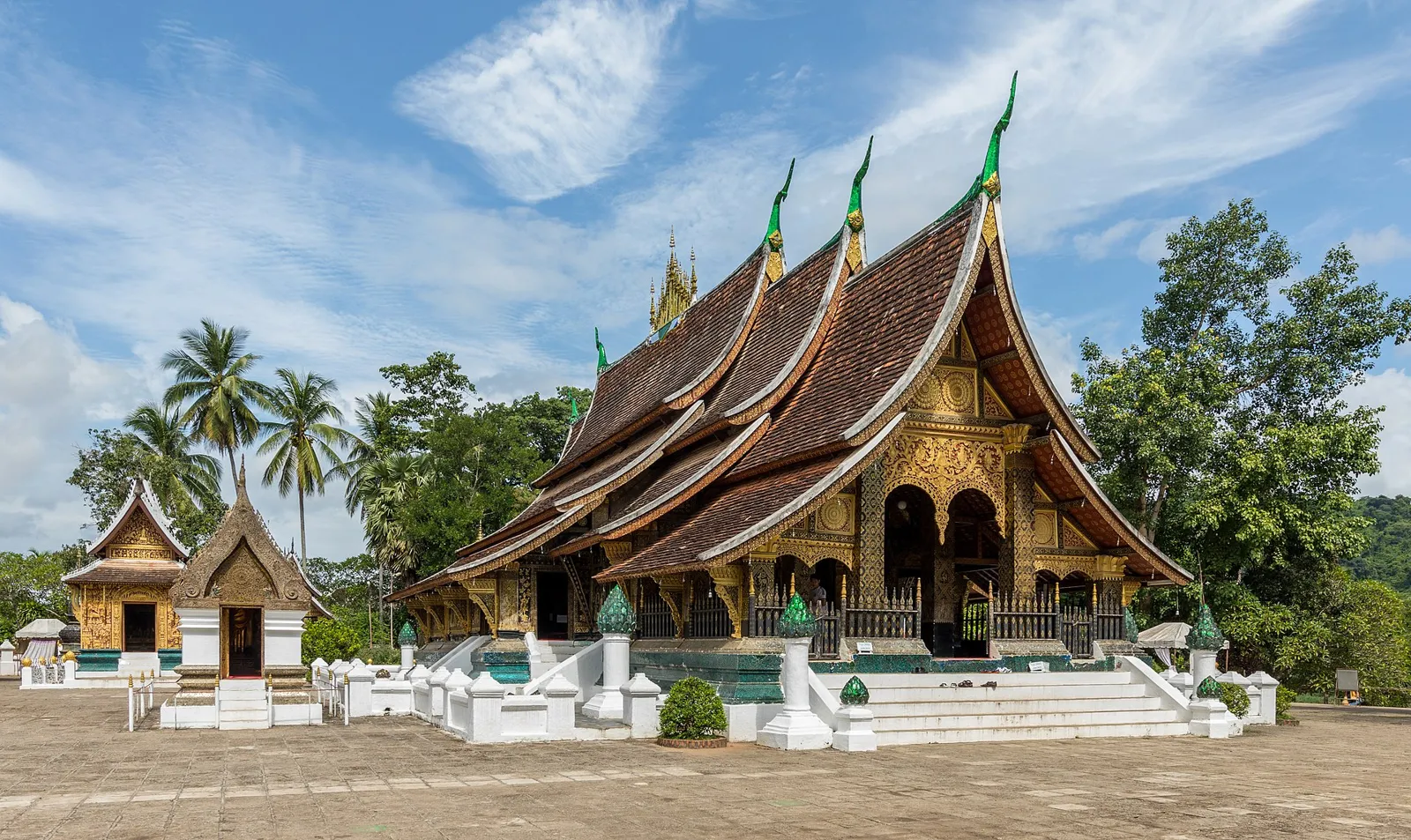
Sweeping temple roofs
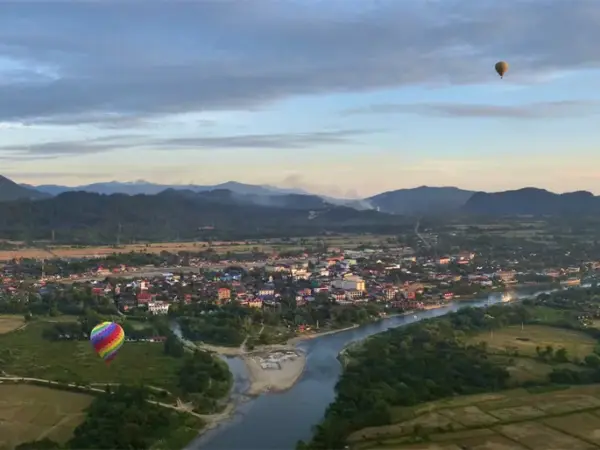
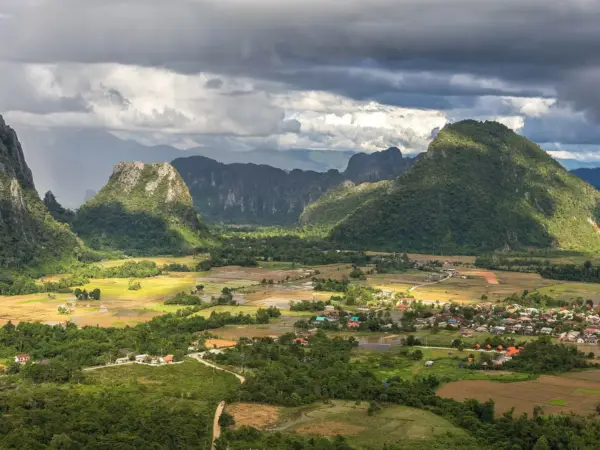
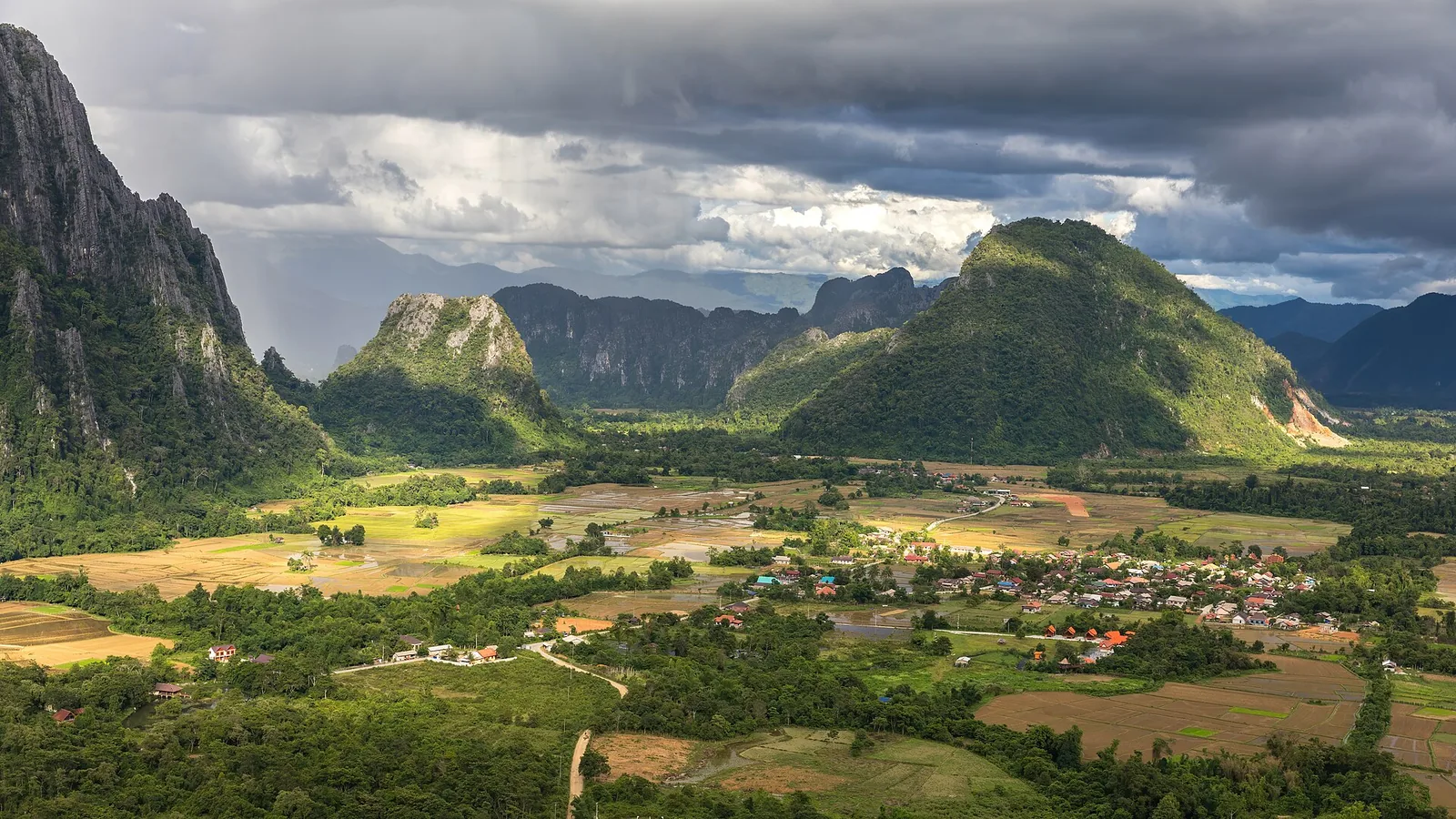
Karst and rice fields at Vang Vieng
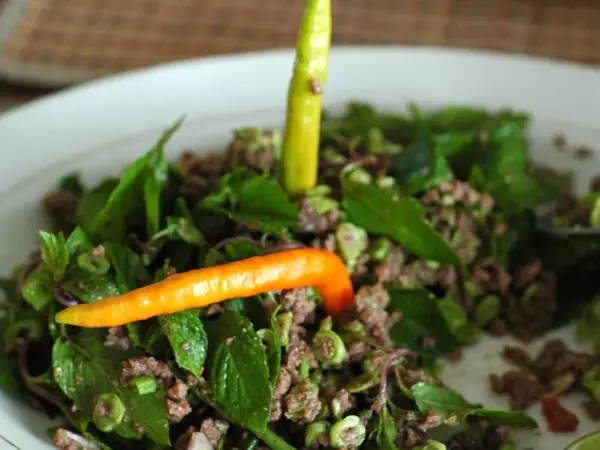
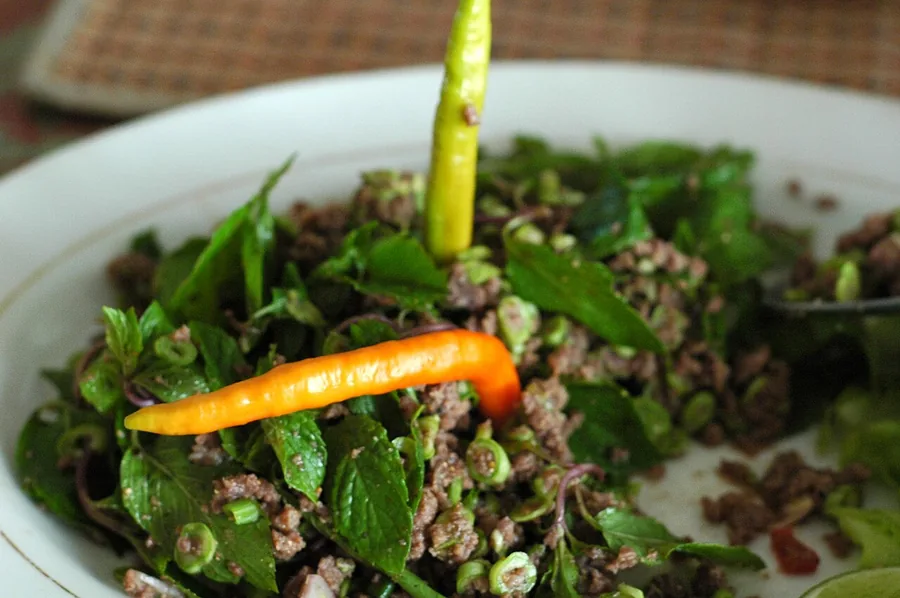
Minced meat or fish salad with herbs and toasted rice
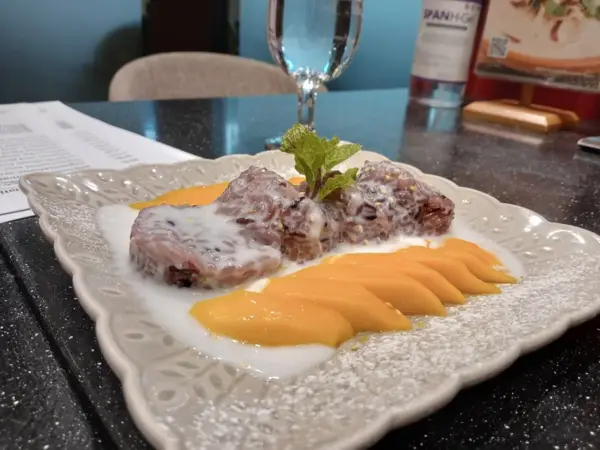
Khao niao, eaten by hand with everything
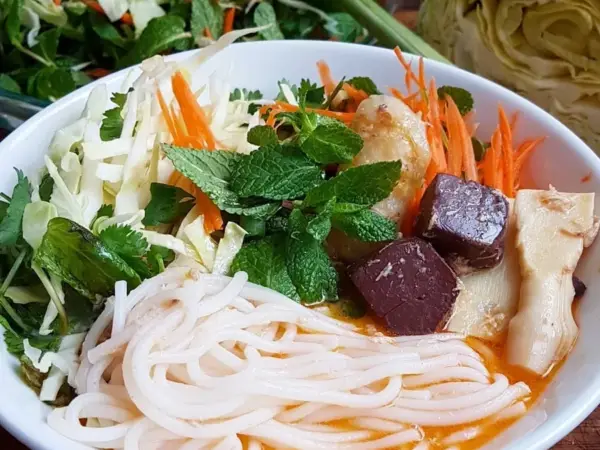
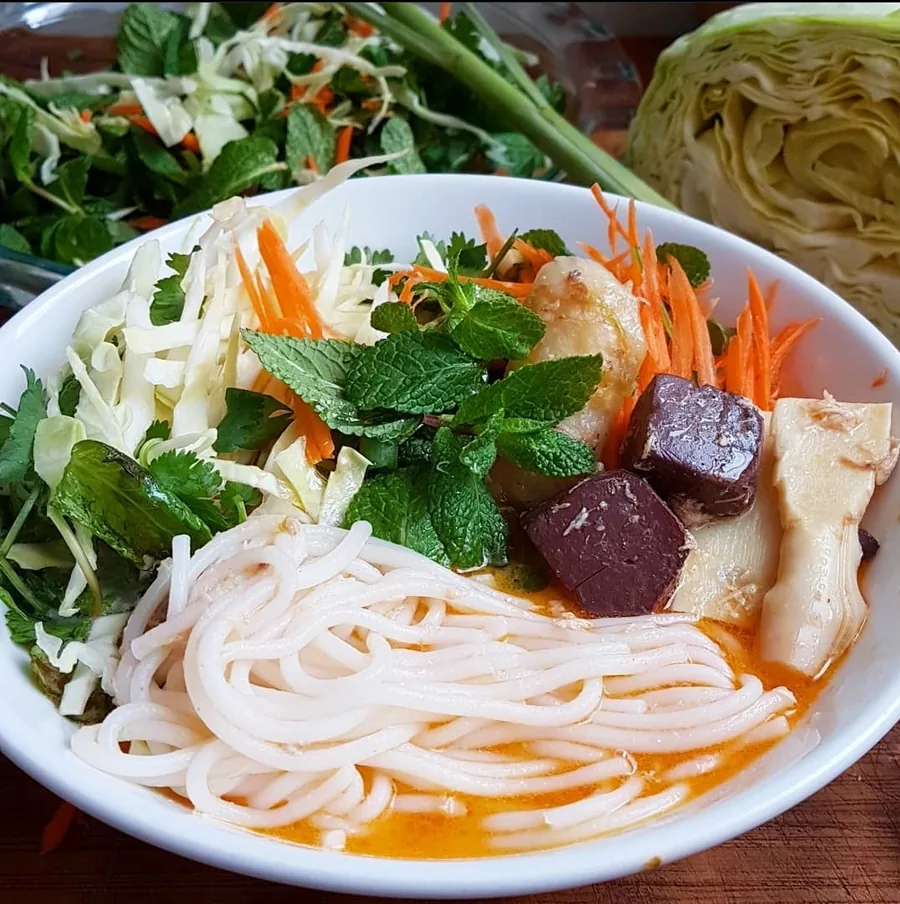
Spicy rice noodle soup
Fiery green papaya salad
The full guide
Laos is Southeast Asia’s only landlocked country, sitting between Thailand, Vietnam, Cambodia, China and Myanmar, with the Mekong running down much of its length. It is slow, green and deeply Buddhist: saffron-robed monks, gilded temples, limestone karst, waterfalls and river islands. In one trip we can see Vientiane’s Pha That Luang and riverside night market, the UNESCO-listed old town of Luang Prabang, the karst and rivers of Vang Vieng, the mysterious Plain of Jars and, in the far south, the Bolaven Plateau and the Mekong islands of Si Phan Don.
Laos suits travellers who like culture, nature and a gentle pace, and it pairs well with a trip to Vietnam or Thailand. It is not a party or luxury-shopping destination, and getting around outside the railway line takes time. There are no nonstop flights from India, so plan on one connection.
Late October is when Laos marks the end of Buddhist Lent. In 2026 Boun Ok Phansa falls on Monday 26 October, and the celebrations around it are the best reason to be here this week: Vientiane’s boat-racing festival (Boun Suang Heua) on the Mekong along Fa Ngum Road on Tuesday 27 October, the Lai Heua Fai festival of illuminated boats in Luang Prabang, and boat races in Pakse. Along the Mekong in Bolikhamxay province, crowds gather on Ok Phansa night hoping to see the “naga fireballs” rise from the river. A month later, the That Luang Festival in Vientiane runs from 21 to 24 November 2026.
The rains are also easing. October is much drier than August and September, the countryside is still green, the rivers are high and the waterfalls are full, and the cool, dry peak season from November to February is just ahead.
Laos has three broad seasons. Here are the averages for Vientiane:
| Month | Avg high | Avg low | Rain/precipitation |
|---|---|---|---|
| Jan | 29.0°C | 18.2°C | 7 mm |
| Feb | 31.0°C | 19.3°C | 17 mm |
| Mar | 33.4°C | 21.7°C | 44 mm |
| Apr | 34.8°C | 24.2°C | 89 mm |
| May | 33.6°C | 25.0°C | 226 mm |
| Jun | 32.6°C | 25.4°C | 264 mm |
| Jul | 31.8°C | 25.3°C | 300 mm |
| Aug | 31.4°C | 25.0°C | 341 mm |
| Sep | 31.7°C | 24.6°C | 265 mm |
| Oct | 31.7°C | 23.9°C | 87 mm |
| Nov | 30.8°C | 21.5°C | 15 mm |
| Dec | 28.9°C | 19.2°C | 5 mm |
November to February is the cool, dry season and the most popular time to visit, with clear days and cool nights, especially in the north and the uplands. March to May is hot, and in the north the burning season can bring smoke and haze around March and April. The monsoon, roughly May to October, brings heavy showers, green rice fields and fewer travellers, though some rural roads get difficult. Late October is a good shoulder: the rain is tailing off, the festivals are on, and prices have not yet reached peak-season levels.

Indian citizens need a visa for Laos, and there are two easy ways to get one. The first is a visa on arrival, available at the main international airports (Vientiane, Luang Prabang and Pakse) and major land crossings such as the Thai–Lao Friendship Bridge. It is valid for a 30-day stay; the fee is paid in cash, commonly reported at around US$40, so carry clean US dollar notes, a passport photo and a passport valid for at least six months. The second is the official eVisa at laoevisa.gov.la, also for 30 days; the portal’s fee calculator showed US$50 in autumn 2026, and processing typically takes about three working days, so apply at least a week ahead. The eVisa can only be used at the ports listed on the portal, which include Wattay (Vientiane), Luang Prabang and Pakse airports, Friendship Bridges I, II and IV, the Boten border and the railway stations at Boten and Khamsavath (Vientiane).
From 2026, every traveller must also complete the free Lao Digital Immigration Form (LDIF) online within three days before arrival; the Embassy of India in Vientiane has reminded Indian travellers about it. Fees and rules change, so check the eVisa portal and the embassy’s notices before you travel.
The currency is the Lao kip (LAK). On 24 October 2026, ₹1 was worth about 235 kip, so 100,000 kip is roughly ₹425. Laos is still largely a cash economy: ATMs are easy to find in Vientiane, Luang Prabang, Vang Vieng and Pakse but charge fees and have withdrawal limits, and they are scarce in rural areas and on the islands. Some hotels and tour agencies quote in US dollars or Thai baht, but kip is best for everyday spending. Bring some US dollars for the visa and as a backup, and spend or change your kip before leaving, since it is hard to exchange outside Laos. Indian rupees are not easy to exchange in Laos.
Here is a rough idea of daily costs per person in Indian rupees, excluding international flights and visa. These are our estimates, not quotes.
| Budget | Mid-range | Comfort | |
|---|---|---|---|
| Stay | ₹800 – ₹1,800 | ₹2,500 – ₹5,000 | ₹8,000 – ₹20,000 |
| Food | ₹500 – ₹1,000 | ₹1,200 – ₹2,000 | ₹2,500 – ₹5,000 |
| Local transport | ₹300 – ₹800 | ₹800 – ₹1,800 | ₹2,000 – ₹4,000 |
| Activities and entry | ₹300 – ₹1,000 | ₹1,000 – ₹2,500 | ₹2,500 – ₹6,000 |
| Total per day | ₹1,900 – ₹4,600 | ₹5,500 – ₹11,300 | ₹15,000 – ₹35,000 |
Laos is good value by Southeast Asian standards. Train tickets, domestic flights and guided trips are the biggest extra costs, and peak-season prices from November to February are higher.
There are no nonstop flights between India and Laos, so we connect. The most common route is via Bangkok, with onward flights on Lao Airlines, Thai Airways or Thai AirAsia to Vientiane or Luang Prabang. Other connections run through Hanoi, Kuala Lumpur, Singapore and Ho Chi Minh City. Total journey times depend on the layover, so compare full itineraries, and remember to check transit rules for the connecting country. Kolkata is the closest Indian city, at about 1,560 km in a straight line to Vientiane.
| From | Air distance to Vientiane (approx.) | Usual routing |
|---|---|---|
| Kolkata | ~1,560 km | One stop, often via Bangkok |
| Chennai | ~2,460 km | One stop, via Bangkok, KL or Singapore |
| Bengaluru | ~2,710 km | One stop, via Bangkok, KL or Singapore |
| Delhi | ~2,850 km | One stop, via Bangkok or Hanoi |
| Mumbai | ~3,130 km | One stop, via Bangkok or KL |
Air distances are great-circle estimates to Wattay International Airport, Vientiane; there are no nonstop flights from India.
Most travellers fly into Wattay International Airport in Vientiane or Luang Prabang International Airport. Overland, the classic route is from Bangkok to Nong Khai in northeast Thailand and across the First Thai–Lao Friendship Bridge to Vientiane; Thai trains from Bangkok now also run across the border to Khamsavath station in Vientiane, so check current schedules. In the north, the railway links Vientiane with Boten on the China border.
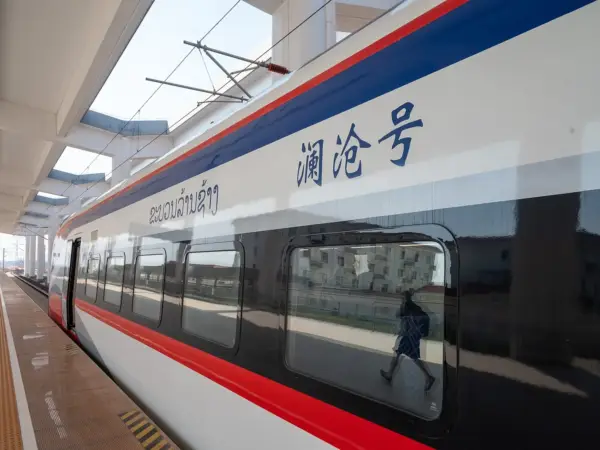
The Laos–China Railway, opened on 3 December 2021, has changed travel in Laos. Fast trains link Vientiane, Vang Vieng and Luang Prabang, with Vientiane to Luang Prabang taking roughly two hours instead of a full day by road. Tickets sell out, especially around holidays, so book ahead through the official LCR ticket app or at stations, with your passport. The stations are outside the town centres, so allow time and money for a shared van or tuk-tuk at each end. Elsewhere, buses and minivans run between towns, Lao Airlines flies domestic routes such as Vientiane to Pakse and Xieng Khouang (for the Plain of Jars), and in towns we use tuk-tuks, ride-hailing apps such as LOCA in Vientiane, or hired bicycles and scooters.
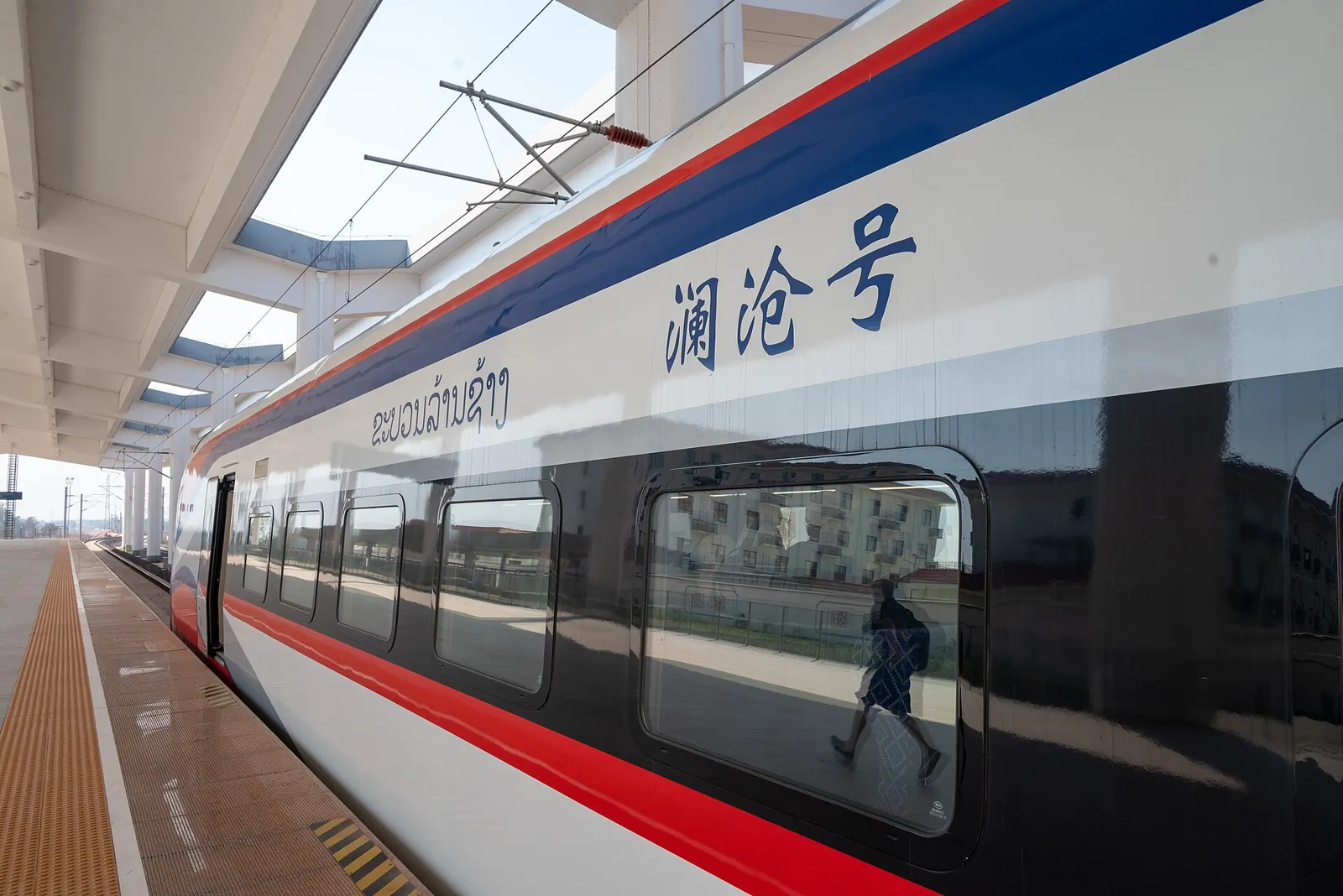
Vientiane and Luang Prabang by train.
Vientiane, Vang Vieng and Luang Prabang.
North by train, then south to Pakse, the Bolaven Plateau and Si Phan Don.
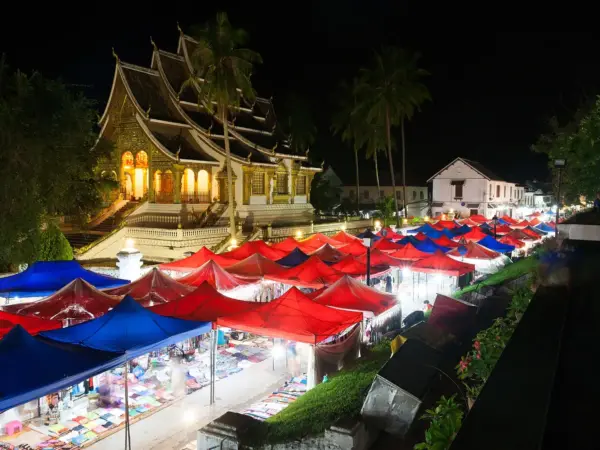
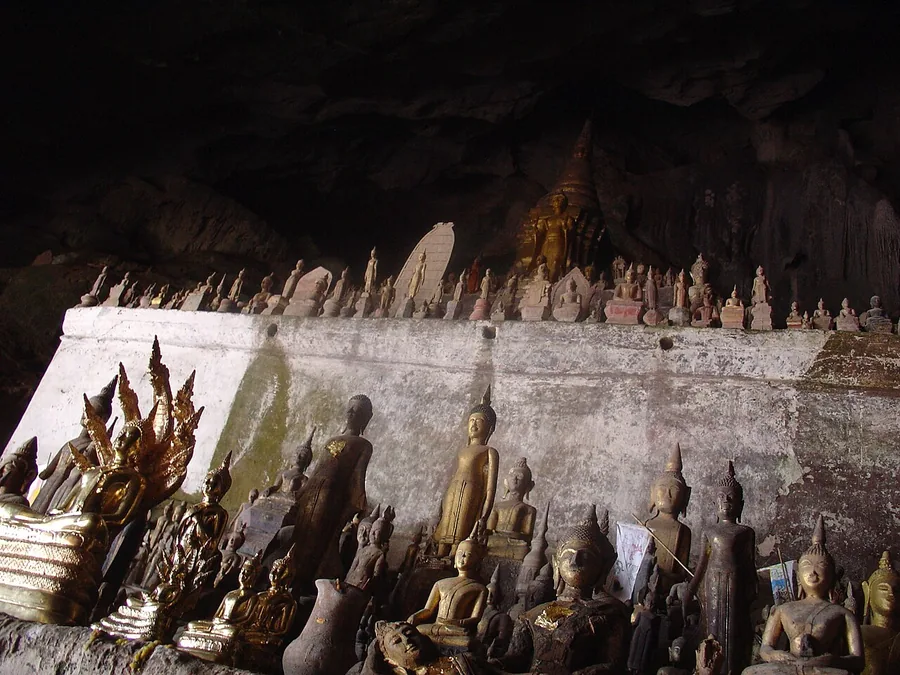
The former royal capital, on a peninsula where the Nam Khan meets the Mekong, has been a UNESCO World Heritage Site since 1995. We wander its temples, including the sweeping roofs of Wat Xieng Thong, climb Mount Phousi for sunset, browse the evening night market, and take a boat up the Mekong to the Pak Ou caves, filled with Buddha images. Kuang Si Falls, with its turquoise pools, is about an hour’s drive away.
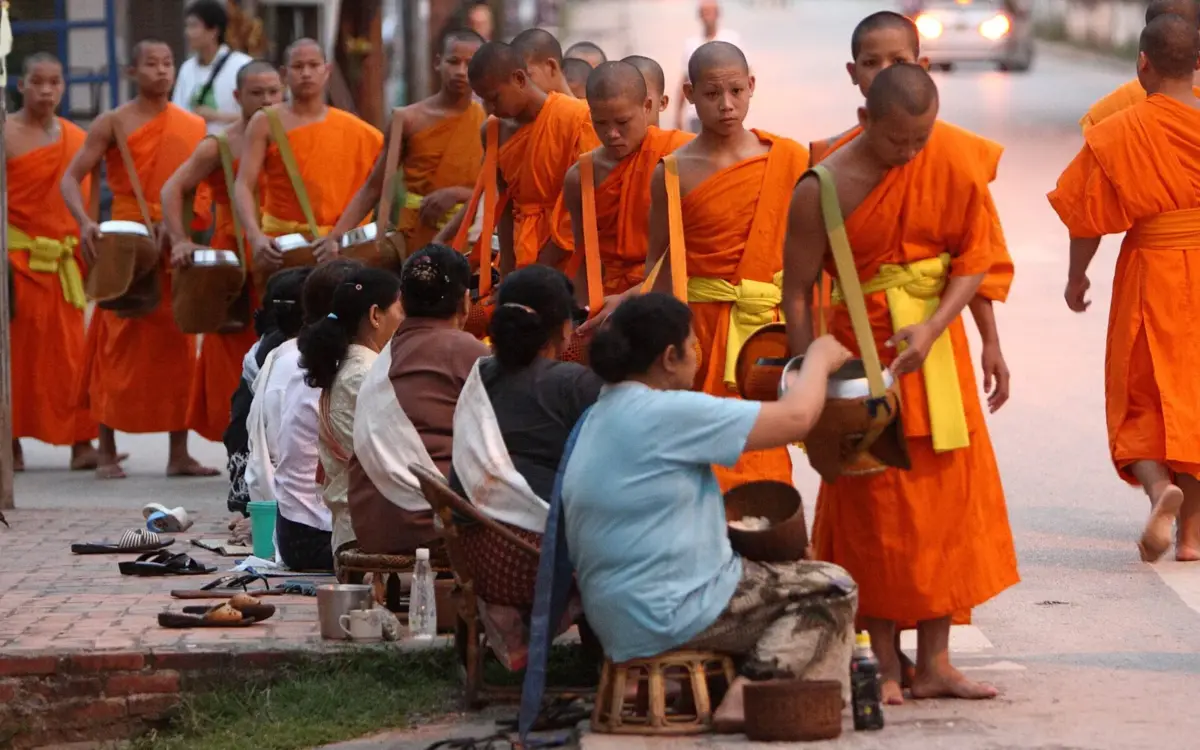
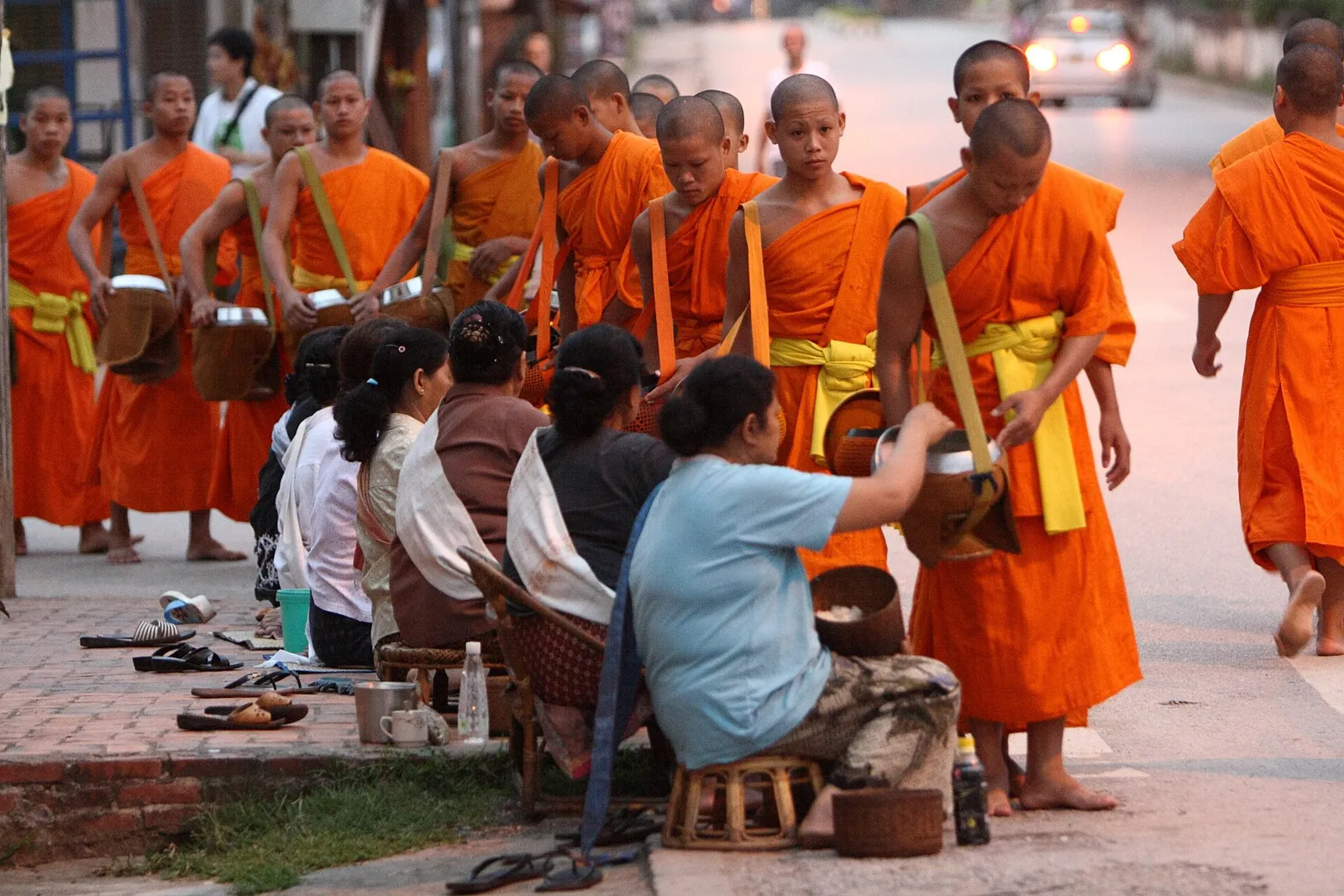
At dawn, lines of monks walk the streets of Luang Prabang collecting sticky rice from residents. Watch quietly from a distance, or join only if you do it respectfully, as we explain under etiquette.
A relaxed capital on the Mekong. See Pha That Luang, the national symbol, Patuxai monument, the temple of Wat Si Saket, and the COPE visitor centre, which tells the story of unexploded bombs in Laos. In the evening, the riverside night market and the walkway along the Mekong come alive.
Limestone karst, caves, lagoons and the Nam Song river, with kayaking, tubing, cycling and viewpoints such as Nam Xay. Hot-air balloon flights run in good weather.
Near Phonsavan in Xieng Khouang, hundreds of huge stone jars dating back to the Iron Age are scattered across the hills. It became a UNESCO World Heritage Site in 2019. Stay on the marked paths, as the area was heavily bombed.
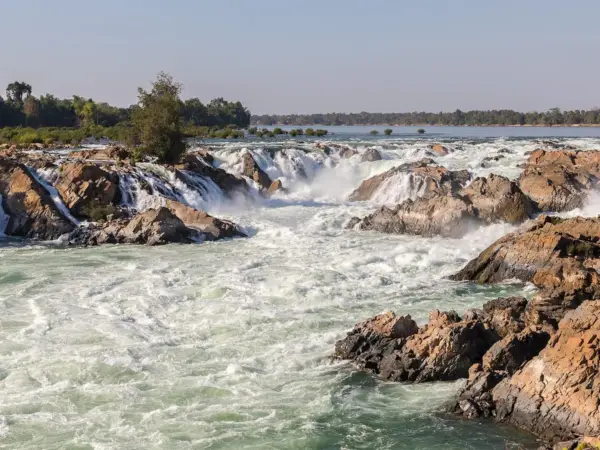
Near Champasak, the hillside Khmer temple of Vat Phou is another UNESCO site. Nearby, the cool Bolaven Plateau is known for coffee and waterfalls, and the river islands of Si Phan Don are made for hammocks and bicycles.
If time is short, we would pick three: two or three slow days in Luang Prabang, the train ride through the mountains, and an evening on the Vientiane riverfront. If you are in Laos on 26–27 October 2026, plan around the Ok Phansa celebrations.
In Khammouane province, a river runs right through a limestone mountain, and you travel through the cave by longtail boat. It is a long trip from Vientiane, so plan at least two nights.
East of Pakse, coffee farms, cool air and waterfalls such as Tad Fane and Tad Yuang make a great loop by scooter or with a driver.
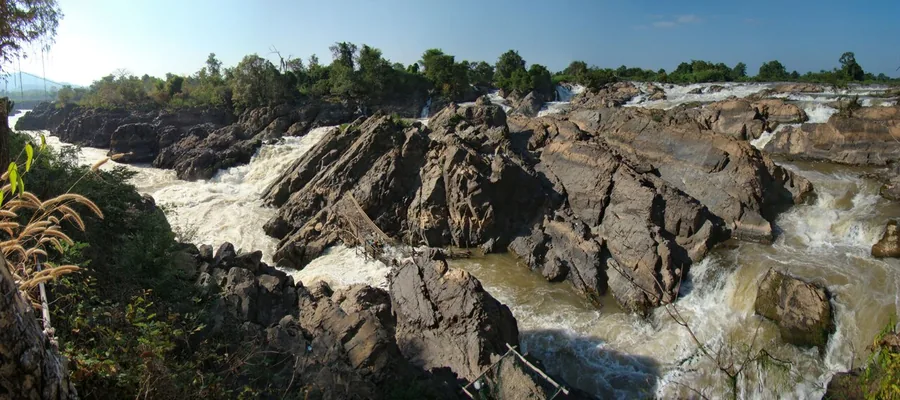
Quieter than its neighbour Don Det, the island has the Li Phi (Tad Somphamit) falls and remains of an old French-era railway. Khone Phapheng, one of the largest waterfalls in Southeast Asia by volume, is a short ride away on the mainland.

In Luang Prabang, the old town peninsula is the most atmospheric base, with guesthouses and boutique hotels in old houses; stays just outside the peninsula are cheaper. In Vientiane, we stay near the riverfront and the Nam Phou fountain area, within walking distance of restaurants and the night market. Vang Vieng has riverside resorts with karst views and many budget guesthouses. In the south, Pakse is the base for the Bolaven Plateau, and Don Det and Don Khone have simple riverside bungalows. Book ahead for late October festivals and the November to February peak.
Lao food is fresh, herby and often fiery, and it is eaten with sticky rice (khao niao) rolled into balls by hand. Try larb, a minced meat or fish salad with herbs and toasted rice; tam mak hoong, green papaya salad; khao piak sen, a comforting rice noodle soup; khao poon, a spicy noodle soup; and grilled fish or chicken from street stalls. Baguette sandwiches, a legacy of French rule, are a popular breakfast, and strong Lao coffee from the Bolaven Plateau is excellent. Night markets in Vientiane and Luang Prabang are an easy place to graze.
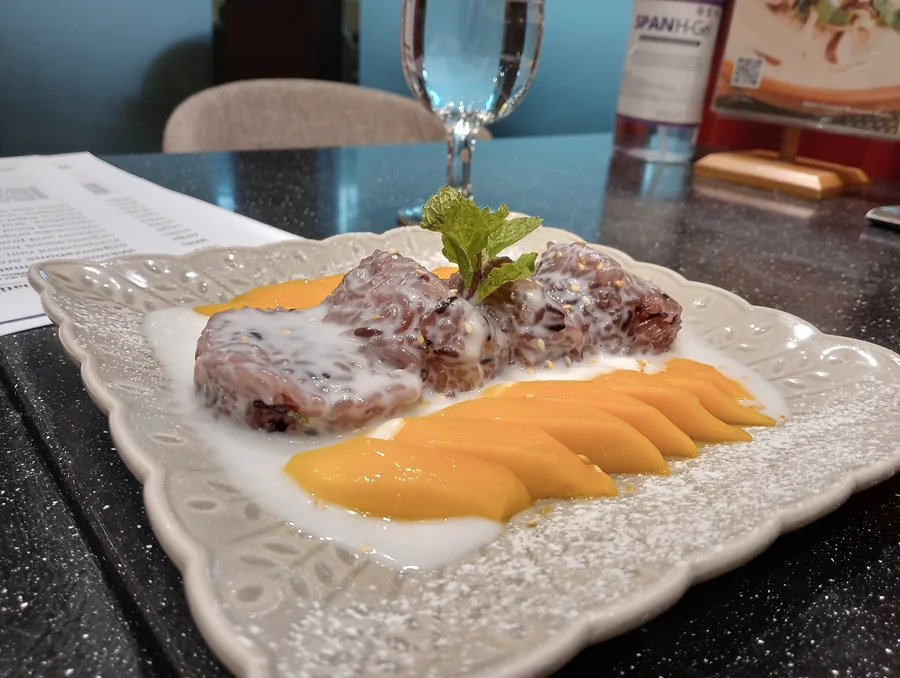
Vientiane, Luang Prabang and Vang Vieng have a few Indian restaurants serving North Indian dishes, and most tourist cafés offer vegetarian options. In local food, fish sauce and fermented fish paste (padaek) are common, even in dishes that look vegetarian, so ask clearly. Fruit, sticky rice, vegetable stir-fries and baguette sandwiches without meat are easy fallbacks. Strict vegetarians and Jains may want to carry some ready-to-eat food for longer journeys.
Laos is known for handwoven silk and cotton textiles, and the night markets in Luang Prabang and Vientiane are full of scarves, bags, mulberry paper lamps and wood carvings. Bolaven Plateau coffee makes a good gift. Bargain gently and with a smile; prices are often reasonable to begin with. Do not buy antiques, Buddha images or wildlife products without checking export rules.
The main mobile operators include Lao Telecom, Unitel and ETL, and tourist SIM cards are sold at the airports and in towns; bring your passport for registration. An international eSIM is another easy option. Coverage is good in towns and along the railway, but patchy in the mountains and on the islands. Most hotels and cafés have Wi-Fi.
Laos uses 230 V at 50 Hz, with a mix of sockets, mostly Types A, B, C, E and F. Indian two-pin Type C plugs usually fit, but the heavier three-pin Type D plugs do not, so we carry a universal adapter. Most phone and laptop chargers work without a converter.
We strongly recommend travel insurance that covers medical treatment and evacuation. Medical facilities outside Vientiane are limited, and serious cases are often transferred to hospitals in Thailand. Check that adventure activities such as tubing, kayaking, scooter riding or ballooning are covered if you plan to do them.
Laos is generally safe and friendly, but a few things matter. Unexploded ordnance from the Indochina war still lies in parts of the countryside, especially in Xieng Khouang and the east, so stay on marked paths and never pick up metal objects. Road safety is the bigger everyday risk: if you rent a scooter, wear a helmet and make sure your licence and insurance cover it. Drug laws are very strict, so avoid any “special” menus in backpacker bars. Rivers can be fast after the rains, so wear a life jacket on the water and check conditions before tubing. In cities, watch out for bag snatching from passing motorbikes, and agree prices for tuk-tuks and tours before you start.
Laos is a calm, polite country, and losing your temper in public is frowned upon. At the Luang Prabang alms giving, keep a respectful distance, do not use flash, do not stand in the monks’ path, and do not buy food from vendors just to take part; if you join, kneel quietly, dress modestly and offer only freshly prepared sticky rice. Public displays of affection are not common. Tipping is not traditional, but small tips for good service are appreciated in tourist areas. “Khop chai” means thank you.
Myth: Laos is hard to reach from India. Fact: There are no nonstop flights, but one-stop connections via Bangkok, Hanoi, Kuala Lumpur or Singapore are straightforward, and visa on arrival is available.
Myth: Getting around Laos takes days. Fact: The railway now links Vientiane, Vang Vieng and Luang Prabang in a few hours.
Myth: Laos is just a backpacker stop. Fact: Luang Prabang, the Plain of Jars and Vat Phou are UNESCO World Heritage Sites, and there are comfortable stays for every budget.

The kingdom of Lan Xang, the “land of a million elephants”, was founded in the 14th century by Fa Ngum, with Luang Prabang as its early capital; the capital later moved to Vientiane, where King Setthathirat built Pha That Luang in the 16th century. Lan Xang later split into rival kingdoms, came under Siamese influence and then became part of French Indochina in the late 19th century. Laos gained full independence in 1953, and after a long civil war the Lao People’s Democratic Republic was declared in 1975. During the Indochina war, Laos was very heavily bombed, and clearing unexploded ordnance is still a national task.
Theravada Buddhism shapes daily life, from the morning alms round to the temple festivals that mark the farming calendar, while many ethnic groups, including the Hmong and Khmu, live in the hills.
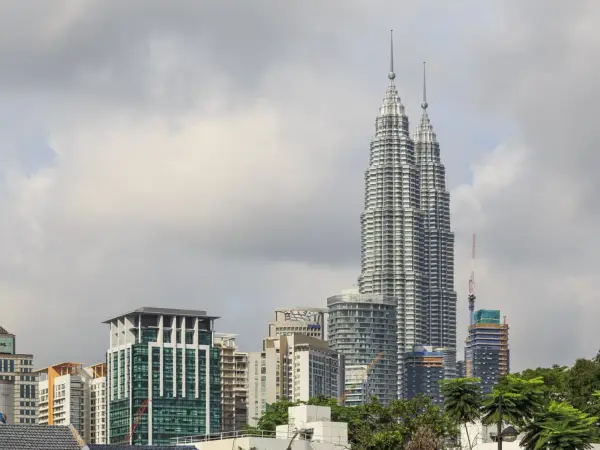
Planning a longer Southeast Asia trip? Malaysia is also visa-free for Indians until the end of 2026.
Yes. Indian citizens can get a 30-day visa on arrival at the main airports and land crossings, paid in cash (commonly around US$40), or apply in advance for the official eVisa at laoevisa.gov.la, which showed a US$50 fee in autumn 2026.
The Lao Digital Immigration Form, a free online arrival form that all travellers must complete within three days before entering Laos from 2026.
No. We connect via Bangkok, Hanoi, Kuala Lumpur, Singapore or Ho Chi Minh City to Vientiane or Luang Prabang.
The Lao kip (LAK). On 24 October 2026, ₹1 was about 235 kip, so 100,000 kip is roughly ₹425. Cash is king outside big towns.
Monday 26 October 2026, with Vientiane’s boat races on Tuesday 27 October and the Lai Heua Fai boat-of-lights festival in Luang Prabang.
21 to 24 November 2026 in Vientiane.
The Laos–China Railway takes roughly two hours. Book tickets ahead on the official LCR app or at stations with your passport.
Two-pin Type C plugs usually fit; three-pin Type D plugs do not. The supply is 230 V, so carry a universal adapter.
Generally yes. Be careful on roads and rivers, stay on marked paths in areas with unexploded ordnance, and keep away from drugs, which carry severe penalties.
Five days covers Vientiane and Luang Prabang; seven adds Vang Vieng; ten lets you add the south or the Plain of Jars.
We researched background facts from the pages below (Wikimedia text is used under Creative Commons Attribution-ShareAlike) and checked them against official sources where we could. This guide is our own work; prices, visa rules and timings change, so verify before you travel.
Photos:
Been here recently? Share a tip (and a photo) in the comments below and tick “This is a travel tip”. Tips are reviewed before they appear — we never show your email.
Short, useful travel ideas and new guides. Straight to your inbox every Friday.
Message us with your dates and budget and we’ll reply with suggestions.
Chat on WhatsApp
3 comments