Pachmarhi in WinterSandstone gorges, waterfalls and quiet colonial lanes
Madhya Pradesh's only hill station sits at about 1,100 m inside the Satpura forests. Come for waterfalls, cave shrines and sunsets, and plan your reserve permits before you go.
Do I need a permit to visit Pachmarhi?No permit is needed to enter the town. Most of the famous points, including Jata Shankar, Bee Fall, Apsara Vihar, Handi Khoh and Dhoopgarh, are inside the Satpura Tiger Reserve. Visiting them needs a vehicle entry fee, per-person permit charges and a compulsory registered guide, booked online through MPOnline or at the Pachmarhi counter.Which is the nearest railway station to Pachmarhi?Pipariya, about 50 km away (the district site says 40 km) on the Mumbai–Howrah line. Pachmarhi itself has no railway. Taxis, shared jeeps and buses run up from Pipariya.Which is the nearest airport?Bhopal's Raja Bhoj Airport, about 195–200 km by road.Can I drive my own car to the viewpoints?Private light vehicles are allowed in the Pachmarhi sightseeing zone once you pay the entry fee and hire a registered guide. Many visitors still take a registered Gypsy because some tracks are rough.How many days are enough?Three days covers the town, one Gypsy circuit and the waterfall walk without rushing. Two days works if you skip Chauragarh.
Plan my trip
Go-now score
Budget calculator
The full guide
Pachmarhi in Winter: Sandstone Gorges, Sunsets and Colonial Charm
By BuzzyTrip · Updated November 27, 2026
Pachmarhi at a glance
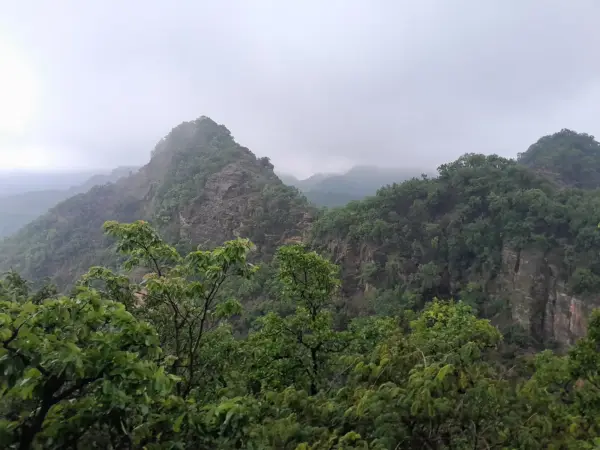
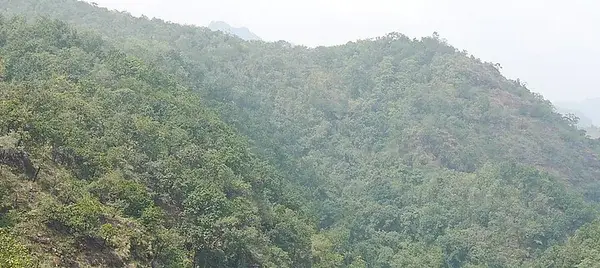
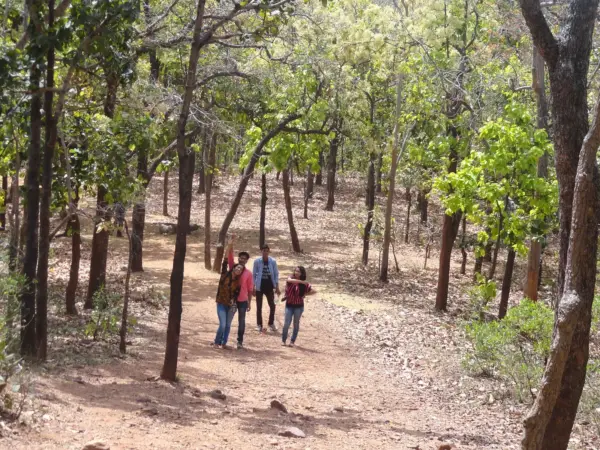
Pachmarhi is Madhya Pradesh’s only hill station, sitting at about 1,100 m on a sandstone plateau in the Satpura range. Locals call it “Satpura ki Rani”. The town is small: a market, a couple of colonial churches and a scatter of hotels. Almost everything worth seeing (gorges, waterfalls, cave shrines and viewpoints) lies in the forest around it, inside the Satpura Tiger Reserve and the wider Pachmarhi Biosphere Reserve. That matters for planning, because most sightseeing happens in a registered Gypsy with a guide, not on your own.
We think it works best for families who want short, rewarding walks, couples chasing sunsets at Dhoopgarh and Priyadarshini Point, and anyone who enjoys a quiet, green break from Bhopal, Nagpur or Jabalpur.
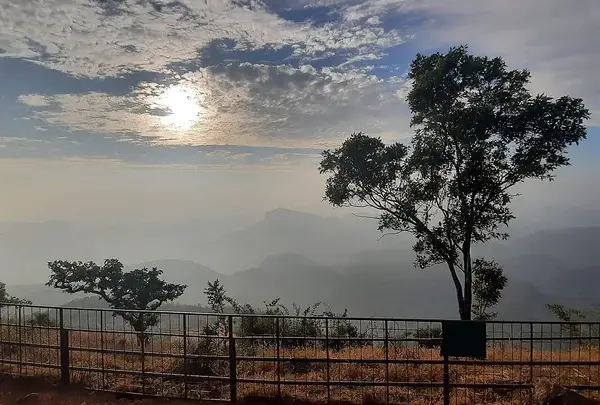
December to February is Pachmarhi’s cool, dry season. Average highs run from about 20.6 °C in January to 24 °C in February, average lows sit between 6 and 9 °C, and each month gets only 6–12 mm of rain (see the climate table below). Trails are dry and Dhoopgarh sunsets are usually clear. The trade-off is that, with very little rain since October, the waterfalls run thinner than they do after the monsoon.
Nothing is shut for the season. The MP Forest Department says the Pachmarhi sightseeing zone of the Satpura Tiger Reserve is open all year. The reserve’s safari zones at Madhai and Churna close from 1 July to 30 September and are open again for the October–June season. Christmas to New Year is the busiest stretch: Incredible India’s events calendar lists the Pachmarhi Utsav for 25–31 December 2026. Christmas Day and New Year’s Day 2027 both fall on a Friday, and Republic Day (26 January 2027) is a Tuesday, so book those weekends early, or come midweek in January or February if you want quiet.
Month-by-month climate averages. Source: Wikipedia weather box (CC BY-SA).
October to March is the pleasant window. October and November still have green forest and flowing falls. December to February is crisp, clear and dry, with average lows of about 6–7 °C in December and January, so the nights are cold. April to June is hot, though the plateau stays cooler than the plains. July to September brings very heavy rain: dramatic waterfalls, but slippery trails, and some routes inside the reserve can be restricted.
Permits, entry fees and Gypsies
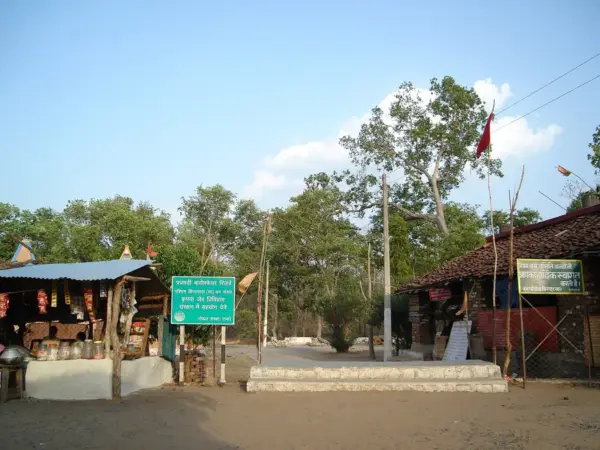
This is the part most guides get wrong. Pachmarhi town is open to everyone, but most of its famous points (Jata Shankar, Bee Fall, Apsara Vihar, Handi Khoh, Dhoopgarh and others) lie inside the Satpura Tiger Reserve’s Pachmarhi sightseeing zone. According to the reserve’s official information:
Sightseeing runs from sunrise to sunset in registered Gypsies. Private light vehicles are also allowed in the Pachmarhi zone once you pay the vehicle entry fee (about ₹250 for a light vehicle), plus per-person permit charges.
A registered guide is compulsory with every vehicle. The guide fee is around ₹600.
Charges are set per viewpoint or as multi-day packages, and were revised upward by about 10% from 1 October 2025.
Book through the Madhya Pradesh Forest Department’s online portal (MPOnline) or at the counter in Pachmarhi, and carry the photo ID used for booking.
We have not listed every package rate because they change. Check the live fee table on the portal before you go, and treat any number from a hotel desk as a quote, not the official fee.
Budget breakdown
These are ranges, not promises. Pachmarhi is cheap to eat in and mid-priced to sleep in, and the Gypsy-plus-guide cost is the item people forget. Splitting a Gypsy four or five ways makes a big difference. Want to tweak the numbers? Try our budget calculator.
Budget
Comfort
Luxury
Stay
₹700–₹1,500
₹2,000–₹4,000
₹5,000–₹10,000
Food
₹300–₹600
₹600–₹1,200
₹1,200–₹2,500
Local transport
₹300–₹700
₹800–₹1,500
₹1,500–₹3,000
Activities & entry fees
₹200–₹600
₹500–₹1,200
₹1,000–₹2,500
Total per day
₹1,500–₹3,400
₹3,900–₹7,900
₹8,700–₹18,000
BuzzyTrip estimates per person per day, made in October 2026 (peak weeks such as Christmas–New Year can cost more), assuming two people share a room and a Gypsy. Reserve entry, guide and Gypsy charges sit under Local transport and Activities.
How to reach Pachmarhi
Gateways to Pachmarhi
Gateway
Distance (approx.)
How to finish the trip
Pipariya railway station
about 50 km
Taxi, shared jeep or bus up the ghat
Bhopal (Raja Bhoj Airport)
about 195–200 km
Private car or bus
Distances from MP Tourism and the Narmadapuram district administration; check live maps before you leave.
By train: Pachmarhi has no railway station. The nearest is Pipariya, about 50 km away (the district site says 40 km) on the Mumbai–Howrah main line via Itarsi and Jabalpur, so many long-distance trains stop there. From Pipariya, taxis, shared jeeps and buses climb the ghat road to Pachmarhi. If your train doesn’t stop at Pipariya, Itarsi Junction is the usual change point.
By air: Bhopal’s Raja Bhoj Airport is the closest, about 195–200 km by road. Hire a car, or head into Bhopal for a bus.
By bus: MP Tourism lists bus connections to Pachmarhi from Bhopal, Pipariya, Jabalpur, Nagpur and Chhindwara. From Bhopal, plan on roughly 6–7 hours. Operators and timings change, so confirm on a booking app or at the bus stand the day before.
Getting around
You can walk around the town and to the churches. For everything else, use a registered Gypsy with a guide, booked at the forest counter or online, or your own car once you have paid the vehicle entry fee and hired a guide. Some points end in a walk or steps, such as the Apsara Vihar trail, the Jata Shankar gorge and the Chauragarh climb, so wear shoes with grip.
A tight weekend for first-timers arriving via Pipariya or Bhopal.
Day 1: Arrive and walk the town
Morning: Reach Pipariya by an overnight train and take a taxi up the ghat road (roughly 50 km, about 1.5–2 hours).
Afternoon: Check in, then walk to Christ Church (1875) and the Catholic church (1892) near the market.
Evening: Catch the sunset at Priyadarshini (Forsyth) Point and eat early at a market dhaba.
Est. cost: ₹2,500–4,000 per person (approx.)
Day 2: Reserve viewpoints by Gypsy
Morning: Book a registered Gypsy and guide at the forest counter and start with Jata Shankar and the Pandav Caves.
Afternoon: Continue to Bee Fall or Apsara Vihar for a dip in the shallow pool, then Handi Khoh.
Evening: Drive down to Pipariya for an evening train home.
Est. cost: ₹3,000–4,500 per person (approx.)
3 days
Our pick for most travellers: town sights, one Gypsy day and one trek.
Day 1: Town and colonial churches
Morning: Arrive via Pipariya, check in and have poha-jalebi for breakfast in the market.
Afternoon: Visit Christ Church, the Catholic church and the Pandav Caves, which sit close to town.
Evening: Sunset at Priyadarshini Point, where Captain James Forsyth first saw the plateau in 1857.
Est. cost: ₹2,500–4,000 per person (approx.)
Day 2: Gypsy circuit inside the reserve
Morning: Hire a registered Gypsy with a guide and do Jata Shankar while the gorge is cool.
Afternoon: Bee Fall, Handi Khoh and Reechgarh, with lunch back in town.
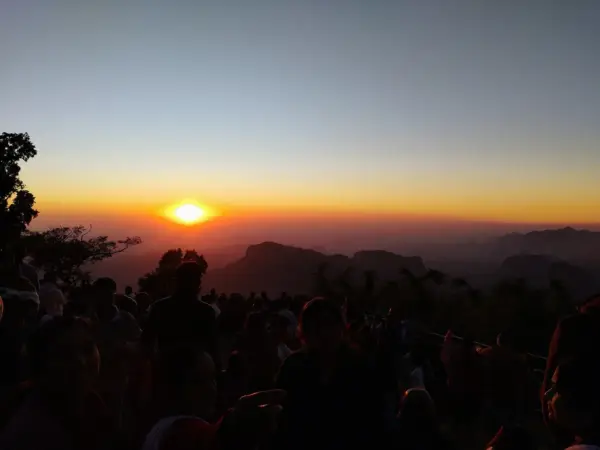
Evening: Dhoopgarh for sunset: it is the highest point of the Satpura range, so carry a jacket.
Est. cost: ₹3,500–5,500 per person (approx.)
Day 3: Apsara Vihar and Rajat Prapat
Morning: Walk the guided trail to Apsara Vihar’s pool and the viewpoint over Rajat Prapat.
Afternoon: Pick up local honey or herbal products from the market.
Evening: Leave for Pipariya or Bhopal.
Est. cost: ₹2,000–3,500 per person (approx.)
5 days
A slower plateau trip with time for the Chauragarh climb and the museum.
Day 1: Arrive and settle
Morning: Travel up from Pipariya or drive from Bhopal (about 200 km).
Afternoon: Short town walk past the churches and the lake area.
Evening: Sunset at Priyadarshini Point.
Est. cost: ₹2,500–4,000 per person (approx.)
Day 2: Caves and Jata Shankar
Morning: Pandav Caves early, before the coaches arrive.
Afternoon: Jata Shankar’s sandstone gorge and cave shrine.
Evening: Quiet evening; Pachmarhi goes to bed early.
Est. cost: ₹2,500–4,500 per person (approx.)
Day 3: Waterfalls
Morning: Guided walk to Apsara Vihar and the Rajat Prapat viewpoint.
Afternoon: Bee Fall for a splash under the cascade.
Evening: Early dinner and rest for tomorrow’s climb.
Est. cost: ₹3,000–5,000 per person (approx.)
Day 4: Chauragarh
Morning: Start at dawn for the long stepped climb to the Chauragarh Shiva temple.
Afternoon: Rest; visit Bison Lodge, a museum building from 1862.
Evening: Dhoopgarh sunset by Gypsy.
Est. cost: ₹3,000–5,000 per person (approx.)
Day 5: Handi Khoh and depart
Morning: Handi Khoh ravine and a last viewpoint.
Afternoon: Shop for honey and Ayurvedic products.
Evening: Drive down to Pipariya or Bhopal.
Est. cost: ₹2,000–3,500 per person (approx.)
7 days
A full week on the plateau, staying inside the Pachmarhi zone instead of chasing far-off day trips.
Day 1: Arrive
Morning: Train to Pipariya, taxi up the ghat.
Afternoon: Settle in and walk the market.
Evening: Priyadarshini Point sunset.
Est. cost: ₹2,500–4,000 per person (approx.)
Day 2: Heritage town
Morning: Christ Church and the Catholic church.
Afternoon: Pandav Caves and Bison Lodge.
Evening: Dinner at your hotel.
Est. cost: ₹2,000–3,500 per person (approx.)
Day 3: Jata Shankar and Handi Khoh
Morning: Jata Shankar by Gypsy with a guide.
Afternoon: Handi Khoh and Reechgarh.
Evening: Rest.
Est. cost: ₹3,000–5,000 per person (approx.)
Day 4: Waterfall walk
Morning: Apsara Vihar and the Rajat Prapat viewpoint.
Afternoon: Bee Fall.
Evening: Easy evening in town.
Est. cost: ₹3,000–5,000 per person (approx.)
Day 5: Chauragarh climb
Morning: Dawn start for the Chauragarh temple steps.
Afternoon: Recover over a long lunch.
Evening: Stargazing from your hotel lawn if the sky is clear.
Est. cost: ₹2,500–4,000 per person (approx.)
Day 6: Dhoopgarh and rock art
Morning: Ask your guide about the rock-shelter paintings open to visitors that day.
Afternoon: Viewpoints you missed.
Evening: Dhoopgarh sunset.
Est. cost: ₹3,000–5,000 per person (approx.)
Day 7: Depart
Morning: Slow breakfast and souvenir shopping.
Afternoon: Drive down to Pipariya or Bhopal.
Evening: Train or flight home.
Est. cost: ₹1,500–3,000 per person (approx.)
Family with kids
Short drives, shallow pools and early nights for parents with children.
Day 1: Easy arrival
Morning: Arrive via Pipariya and check in.
Afternoon: Short walk to the churches and the Pandav Caves.
Evening: Sunset at Priyadarshini Point.
Est. cost: ₹2,500–4,000 per person (approx.)
Day 2: Pools and caves
Morning: Gypsy to Jata Shankar.
Afternoon: Apsara Vihar, whose shallow pool suits kids under supervision.
Evening: Early dinner.
Est. cost: ₹3,000–5,000 per person (approx.)
Day 3: Bee Fall and home
Morning: Bee Fall with a guide; hold small hands on wet rocks.
Afternoon: Bison Lodge museum.
Evening: Head down to the railhead.
Est. cost: ₹2,500–4,000 per person (approx.)
Couples
Sunrise and sunset viewpoints, slow mornings and a heritage stay.
Day 1: Heritage stay
Morning: Check into one of the old bungalow-style stays.
Afternoon: Stroll to Christ Church.
Evening: Priyadarshini Point sunset.
Est. cost: ₹4,000–7,000 per person (approx.)
Day 2: Gorges and falls
Morning: Jata Shankar while it is quiet.
Afternoon: Apsara Vihar and the Rajat Prapat viewpoint.
Evening: Dhoopgarh sunset, the classic Pachmarhi view.
Est. cost: ₹4,500–8,000 per person (approx.)
Day 3: Slow goodbye
Morning: Handi Khoh.
Afternoon: Long lunch and honey shopping.
Evening: Drive down.
Est. cost: ₹3,000–5,000 per person (approx.)
Budget backpacker
Trains, a shared Gypsy and walkable town sights.
Day 1: Train in
Morning: Sleeper or 3AC to Pipariya, then a shared jeep or bus up.
Afternoon: Walk to the churches and the Pandav Caves.
Evening: Sunset at Priyadarshini Point.
Est. cost: ₹1,200–2,000 per person (approx.)
Day 2: Shared Gypsy day
Morning: Split a registered Gypsy and the guide fee with other travellers at the counter.
Afternoon: Jata Shankar, Bee Fall and Handi Khoh.
Evening: Dhaba dinner.
Est. cost: ₹1,500–2,500 per person (approx.)
Day 3: Falls and out
Morning: Apsara Vihar walk.
Afternoon: Market lunch.
Evening: Bus or jeep back to Pipariya.
Est. cost: ₹1,000–1,800 per person (approx.)
Luxury
A private car from Bhopal, the best rooms in town and a private Gypsy each day.
Day 1: Private transfer
Morning: Fly into Bhopal and take a private car (about 200 km).
Afternoon: Check into a premium resort or a top MP Tourism property.
Evening: Sunset at Priyadarshini Point.
Est. cost: ₹10,000–18,000 per person (approx.)
Day 2: Private Gypsy and guide
Morning: Jata Shankar and the Pandav Caves.
Afternoon: Bee Fall and Handi Khoh.
Evening: Dhoopgarh sunset.
Est. cost: ₹9,000–15,000 per person (approx.)
Day 3: Waterfalls and depart
Morning: Apsara Vihar and the Rajat Prapat viewpoint.
Afternoon: Lunch at the resort.
Evening: Drive back to Bhopal.
Est. cost: ₹8,000–14,000 per person (approx.)
Top things to do
Jata Shankar: a Shiva cave shrine in a narrow sandstone gorge, where a stream emerges beneath huge overhanging rocks. Go early, before the crowds.
Pandav Caves: five rock-cut caves in a sandstone hillock near town, protected as monuments. Local legend links them to the Pandavas.
Bee Fall (Jamuna Prapat): the most accessible waterfall, popular for a splash under the cascade.
Apsara Vihar and Rajat Prapat: a shallow pool at the foot of a small fall that is good for kids, with a viewpoint over the tall Rajat Prapat waterfall.
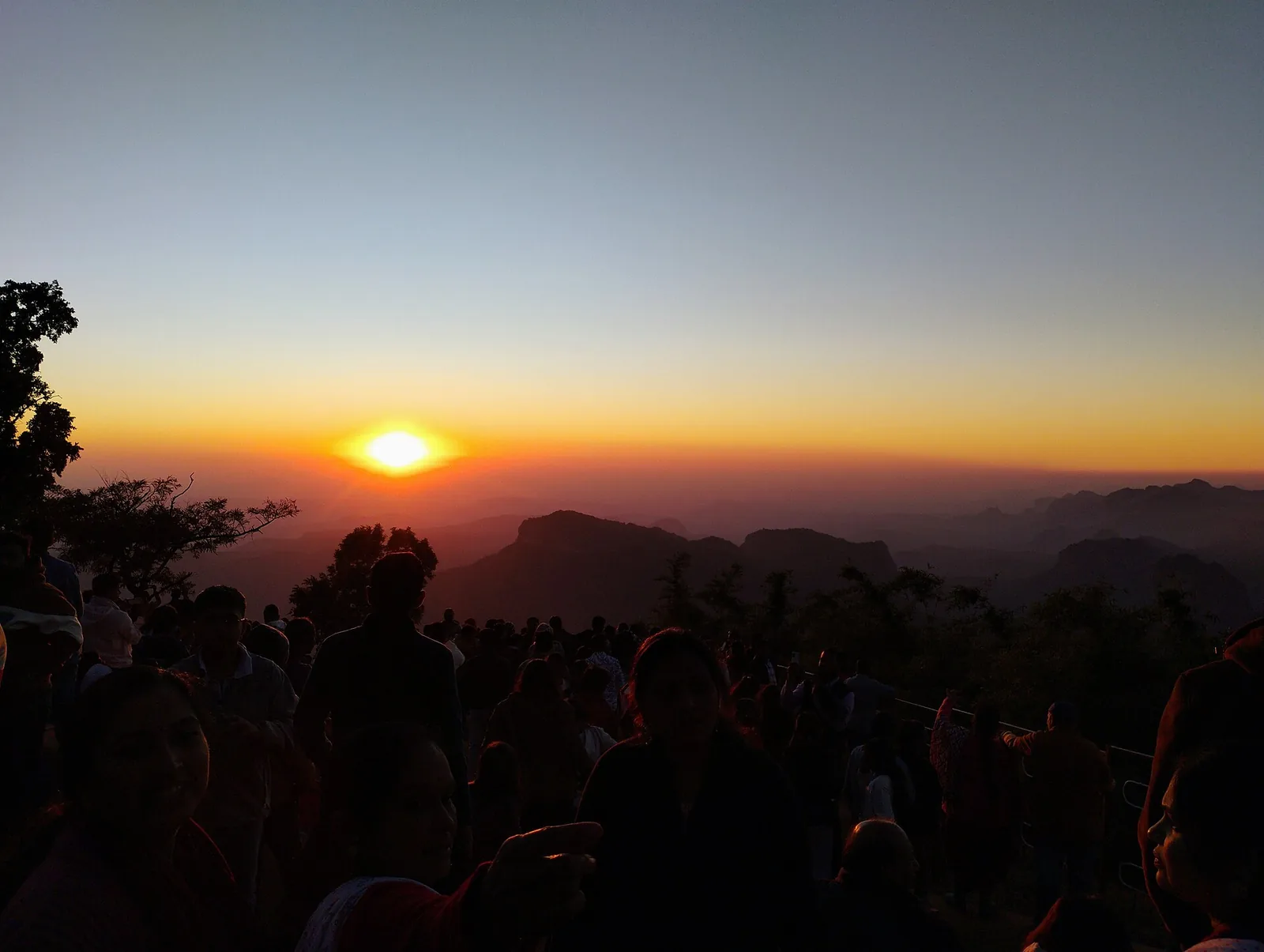
Dhoopgarh: the highest point of the Satpura range and Pachmarhi’s best-known sunset spot.
Priyadarshini (Forsyth) Point: where Captain James Forsyth first saw the plateau in 1857.
Handi Khoh: a ravine about 300 ft deep with sheer forested walls.
Chauragarh: a long stepped climb to a hilltop Shiva temple, busiest around Mahashivratri.
Colonial Pachmarhi: Christ Church (1875), the Catholic church (1892) and Bison Lodge (1862), which now houses a museum.
Most stays cluster around the market and the main road, close to the Gypsy counter. MP Tourism runs several properties here, some in old bungalows, which you can book on the MP Tourism website. Private hotels and homestays fill the budget and mid-range gaps. Choose somewhere within walking distance of the market so evening meals don’t need a car. Book ahead for Christmas–New Year, the Republic Day break (Saturday 23 to Tuesday 26 January 2027, with one day’s leave) and other long weekends.
Where to eat and what to order
Food in Pachmarhi is simple and vegetarian-friendly. Expect poha-jalebi breakfasts, thalis, chaat and roasted bhutta (corn) from carts near the market. Hotel restaurants are the safest bet for dinner because the town shuts early. Local honey and Ayurvedic or herbal products are the classic things to take home.
Local festivals and events
Pachmarhi Utsav (25–31 December 2026): an annual cultural festival that starts on 25 December and runs into the New Year, with folk dances such as Matki, Raai, Ahirai and Bhagoria, folk music, craft fairs and food stalls (Incredible India, citing MP Tourism). MP Tourism’s own events page had no 2026 programme yet when we checked on 24 November, so confirm the schedule before you plan around a particular show.
Christmas–New Year and the Republic Day weekend: the peak domestic holiday weeks this winter, with Christmas and New Year’s Day 2027 on Fridays and Republic Day on Tuesday 26 January 2027.
Mahashivratri (Saturday 6 March 2027): brings large crowds of pilgrims to Chauragarh and the Shiva shrines, so avoid it if you want quiet, or go for the atmosphere.
A warm jacket and an extra layer for early starts and Dhoopgarh sunsets (December–February lows average 6–9 °C)
Quick-dry clothes and a towel for the pools
Photo ID matching your forest booking
Cash for small vendors, since rural network coverage can be patchy
Water bottle, sunscreen and a cap
Safety and what to avoid
Stay on marked paths and follow your guide. This is a tiger reserve, not a park.
Rocks near the falls are slippery, so don’t climb wet boulders for photos.
Don’t feed monkeys, and keep food sealed in vehicles.
Plan to be back before sunset, when reserve sightseeing closes.
Pay fees only at official counters or on the portal.
Do’s and don’ts
Do carry your trash out; plastic is a real problem at the falls.
Do remove footwear where shrines ask you to.
Don’t play loud music at viewpoints or inside the forest.
Don’t swim where the guide says it is unsafe, especially just after rain.
History and culture
The plateau was home to Gond and Korku communities long before the British arrived, and the rock shelters around Pachmarhi hold ancient paintings. Captain James Forsyth “discovered” the plateau for the colonial administration in 1857, and it grew into a summer retreat and cantonment, which is where the churches and Bison Lodge come from. Satpura National Park was set up in 1981, and the Pachmarhi Biosphere Reserve in 1999.
Planning a short break instead? Browse our weekend trips for more getaways under three days.
No permit is needed to enter the town. Most of the famous points, including Jata Shankar, Bee Fall, Apsara Vihar, Handi Khoh and Dhoopgarh, are inside the Satpura Tiger Reserve. Visiting them needs a vehicle entry fee, per-person permit charges and a compulsory registered guide, booked online through MPOnline or at the Pachmarhi counter.
Which is the nearest railway station to Pachmarhi?
Pipariya, about 50 km away (the district site says 40 km) on the Mumbai–Howrah line. Pachmarhi itself has no railway. Taxis, shared jeeps and buses run up from Pipariya.
Which is the nearest airport?
Bhopal’s Raja Bhoj Airport, about 195–200 km by road.
Can I drive my own car to the viewpoints?
Private light vehicles are allowed in the Pachmarhi sightseeing zone once you pay the entry fee and hire a registered guide. Many visitors still take a registered Gypsy because some tracks are rough.
How many days are enough?
Three days covers the town, one Gypsy circuit and the waterfall walk without rushing. Two days works if you skip Chauragarh.
Is Pachmarhi good for kids?
Yes. Apsara Vihar’s shallow pool, the Pandav Caves and short walks suit children. Keep a close eye on them near wet rocks and the falls.
What is Jata Shankar?
A Shiva cave shrine in a narrow sandstone gorge, where a stream flows out from beneath huge overhanging rocks.
Is winter (December–February) a good time to visit Pachmarhi?
Yes, if you want cool, dry days and clear sunsets. Average lows are about 6–9 °C, so pack warm, and the waterfalls run thinner than after the monsoon. Christmas–New Year is the busiest week.
When is the Pachmarhi Utsav 2026?
Incredible India’s events calendar lists it for 25–31 December 2026. It is a cultural festival of folk dance, music, crafts and food. Check MP Tourism for the programme closer to the date.
Is the Satpura Tiger Reserve open in winter?
Yes. Pachmarhi’s sightseeing zone is open all year, and the Madhai and Churna safari zones are open from October to June (closed 1 July–30 September). The Forest Department lists park safaris as closed on Wednesday afternoons and on Holi and Diwali. Book safari rounds on MPOnline.
Sources and credits
We checked prices, permits, visas and routes against the official pages below in October 2026; reserve seasons, the Pachmarhi Utsav listing and the 2027 holiday dates were re-checked on 24 November 2026. Background facts also come from the Wikimedia pages listed, used under Creative Commons Attribution-ShareAlike. This guide is an original work written and edited for BuzzyTrip; fees, visa rules and timetables change, so verify before you travel.
Been here recently? Share a tip (and a photo) in the comments below and tick “This is a travel tip”. Tips are reviewed before they appear — we never show your email.








7 comments