Fact-checked Bali for Indian travellers: the IDR 500,000 visa on arrival, the All Indonesia arrival card, the IDR 150,000 Bali levy, nonstop flights, honest November weather, temple fees and budgets in rupees.
Do Indians need a visa for Bali?Yes. Indian passport holders can get Indonesia's visa on arrival (B1), either online as an e-VOA at evisa.imigrasi.go.id before you fly or at the counter at Bali airport. It costs IDR 500,000 (about ₹2,600) and gives 30 days, extendable once for another 30 days. Use only the official site.What else do I need before landing?Your passport must be valid for at least 6 months from arrival. You'll also need a return or onward ticket and the free All Indonesia arrival card, which covers customs and health. Fill it in online or in the app within 3 days (72 hours) before you arrive. Ignore sites that charge for it.Is the Bali tourist levy compulsory?Yes. Every foreign tourist pays IDR 150,000 (about ₹790) once per trip, on top of the visa. Pay on the official Love Bali website or app before you fly to get a QR voucher by email, or pay at the counters at Bali's airport and ports.Are there direct flights from India to Bali?Yes. As of November 2026, Air India and IndiGo fly nonstop from Delhi, and IndiGo flies daily from Bengaluru (about 7 hours). IndiGo's Mumbai flight currently stops en route, and a nonstop is planned for early 2027. Check the airline's live schedule.Is November a good time to visit Bali?It works if you're flexible. November is the start of the wet season. It's hot (around 31°C) and humid, with more frequent afternoon or evening showers than in the dry months, but crowds are smaller than in July–August and at Christmas.Are there Balinese festivals in November 2026?Pagerwesi falls on 4 November 2026 and is celebrated most visibly in Buleleng in the north. Galungan isn't in November this year: it was on 17 June 2026, and the next one is 13 January 2027, with Kuningan 10 days later. Nyepi, the Day of Silence, is in March, when the whole island including the airport shuts for a day.
Plan my trip
Go-now score
Budget calculator
The full guide
Bali in November: Rice Terraces, Temples and Tasty Warungs
By BuzzyTrip · Updated November 28, 2026
Bali at a glance
Bali is an island province of Indonesia, east of Java, and most Balinese are Hindu. That’s why you’ll see temple gates, morning offerings and ceremonies everywhere. The south (Seminyak, Canggu, Kuta, Jimbaran, Sanur and the Bukit Peninsula) is about beaches and nightlife. Ubud, inland, is about rice terraces, dance and crafts. The highlands and East Bali are cooler and quieter. The currency is the Indonesian rupiah (IDR): ₹1 was about IDR 191 on 2 November 2026 (approximate ECB reference rate). Bali is 2 h 30 min ahead of IST. We’d plan 5–7 days and pick two bases rather than moving every night.
Why go in November
Let’s be honest: November isn’t Bali’s driest month. It’s the start of the wet season. Expect hot, humid days of around 31°C and more frequent afternoon or evening showers than in the dry months. Long-term averages put November rainfall at about 150 mm, against roughly 15–50 mm in July–September and close to 300 mm in December. The upside is smaller crowds than in the July–August peak and the Christmas–New Year rush. Mornings are often clear, which suits temples and rice terraces. We’d plan outdoor sights early, keep afternoons flexible and check boat conditions before a Nusa Penida trip. Pagerwesi, a Balinese Hindu holy day, falls on 4 November 2026.
Visa and entry for Indian passport holders
Visa on arrival / e-VOA: Indians are eligible for Indonesia’s visa on arrival. Apply online as an e-VOA at evisa.imigrasi.go.id before you fly, or pay at the VOA counter at Bali airport. The fee is IDR 500,000 (about ₹2,620). It allows 30 days and can be extended once for another 30 days. The UK government advises extending within your first 30 days, because overstaying costs IDR 1,000,000 a day.
Passport: valid for at least 6 months from your arrival date, with blank pages. Carry a return or onward ticket.
All Indonesia arrival card: a free online declaration covering immigration, customs and health, on allindonesia.imigrasi.go.id or the app. Fill it in within 72 hours before arrival and show the QR code. It replaced the old e-CD customs form.
Bali tourist levy:IDR 150,000 (about ₹780) per foreign tourist, paid once per trip and separate from the visa. Pay on the official Love Bali site or app before you travel to get a QR voucher, or pay at the airport counter.
Bali’s airport is I Gusti Ngurah Rai International (DPS), between Kuta and Jimbaran. As of November 2026, Air India and IndiGo fly nonstop from Delhi (about 8 hours), and IndiGo flies nonstop daily from Bengaluru (about 7 hours). IndiGo’s Mumbai service currently stops en route, and a nonstop is filed for early 2027. Other cities connect via Delhi or Bengaluru, or via Singapore, Kuala Lumpur or Bangkok. Schedules change by season, so check the airline before you book.
Getting around
Ride-hailing: Grab and Gojek work across the south and Ubud, though a few areas restrict app pickups. Use the official taxi counter at the airport or a pre-booked transfer.
Car with driver: the most practical way to sightsee, usually hired by the day. Agree the hours and the fuel and parking costs in advance.
Scooters: only with an International Driving Permit that covers motorcycles, plus a helmet. Police do check, and traffic in the south is heavy.
Distances: short on the map but slow on the road. Seminyak to Ubud can take 1–2 hours.
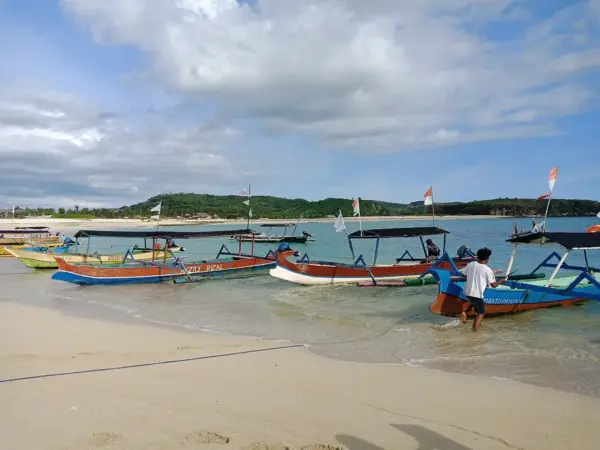
Boats: fast boats from Sanur go to Nusa Penida and Nusa Lembongan. Boats to the Gili Islands and Lombok take longer, so go for at least a night.
Top things to do (with entry fees)
These are foreign-adult gate prices we found for late 2026. Fees change, so treat them as a guide.
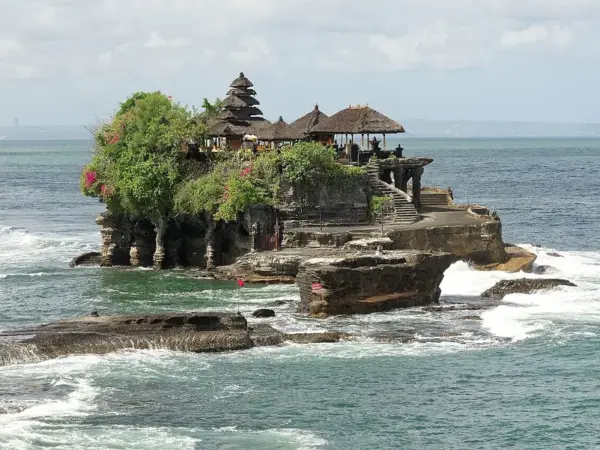
Tanah Lot (Tabanan): a sea temple on an offshore rock, at its best around sunset. IDR 75,000 for foreign adults according to the official site (about ₹390), plus parking. You can only cross to the rock at low tide, and the inner temple is for worshippers.
Uluwatu Temple: a clifftop temple on the Bukit Peninsula. Entry is about IDR 50,000–60,000 for foreign adults, and the sunset Kecak dance is a separate ticket. The monkeys snatch sunglasses and phones.
Pura Ulun Danu Beratan (Bedugul): the lakeside temple in the cool highlands. Reported at IDR 100,000 for foreign adults from July 2026 (about ₹520).
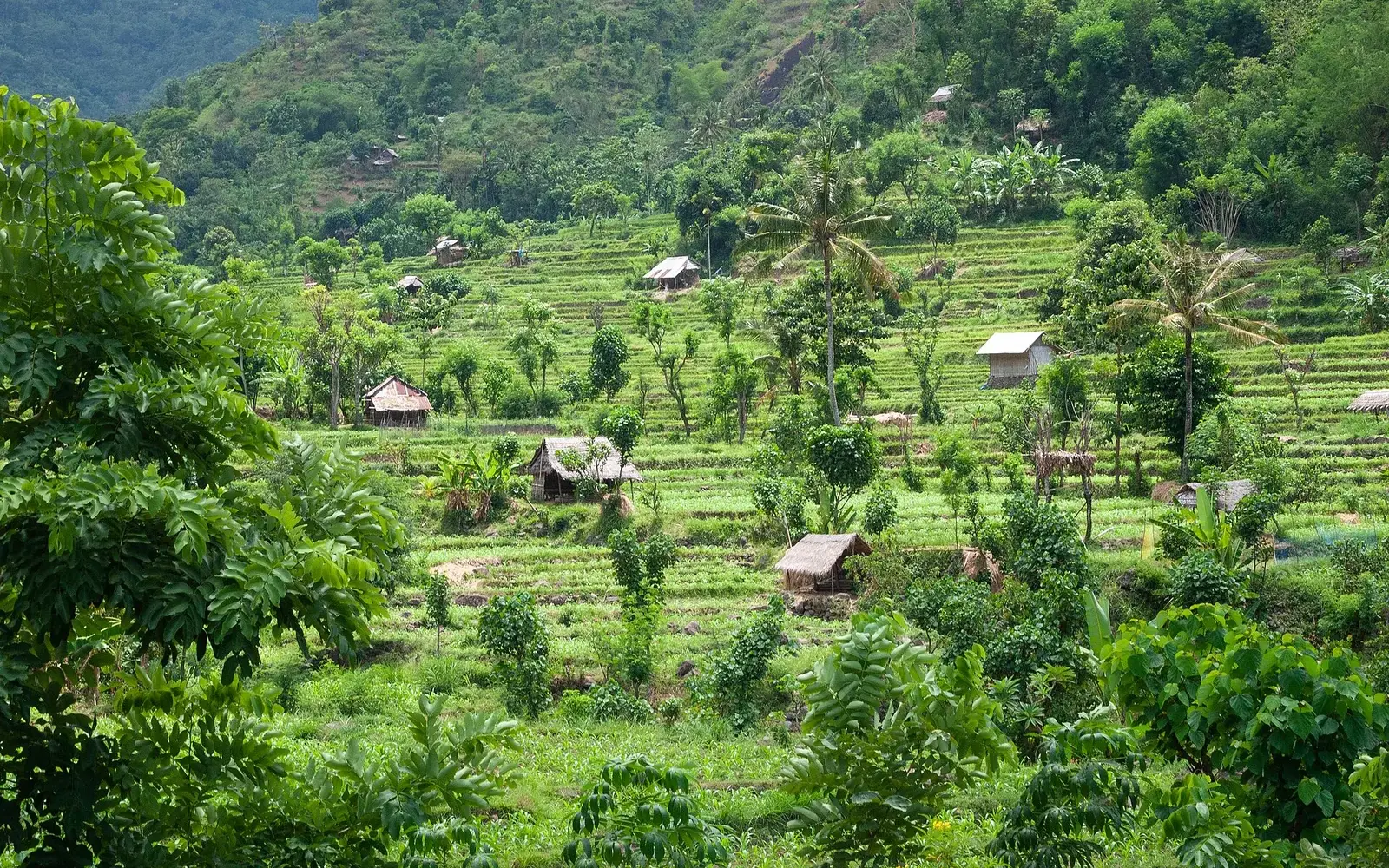
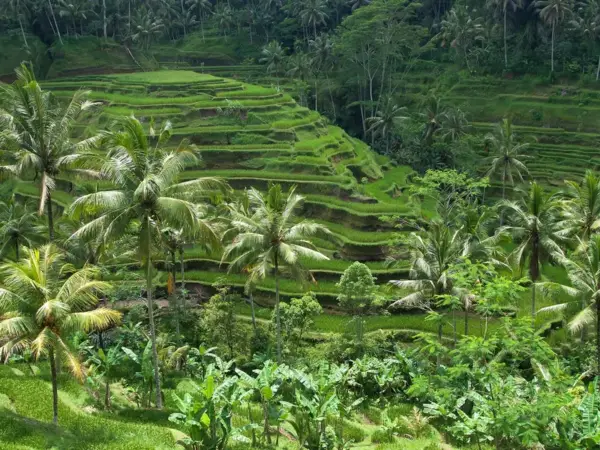
Tegallalang rice terraces (north of Ubud): a small entry fee, around IDR 25,000 (about ₹130), with extra donations or charges on some private paths and swings. Go early.
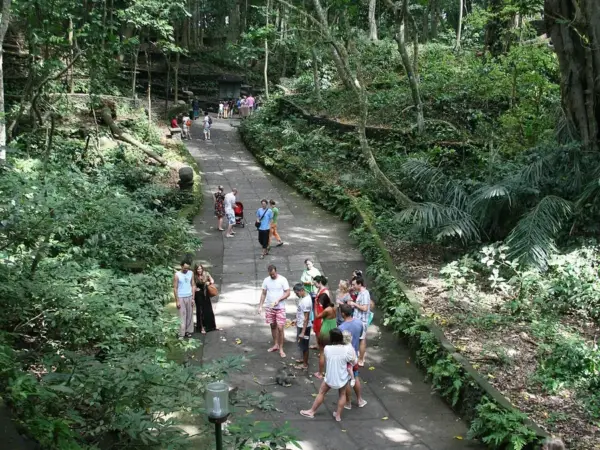
Sacred Monkey Forest Sanctuary, Ubud: IDR 130,000 for foreign adults from April 2026 (about ₹680). Don’t carry food or plastic bags, and don’t touch the macaques.
Mount Batur sunrise hike: a pre-dawn climb of around 2 hours with a local guide. It’s cloudier in the wet season.
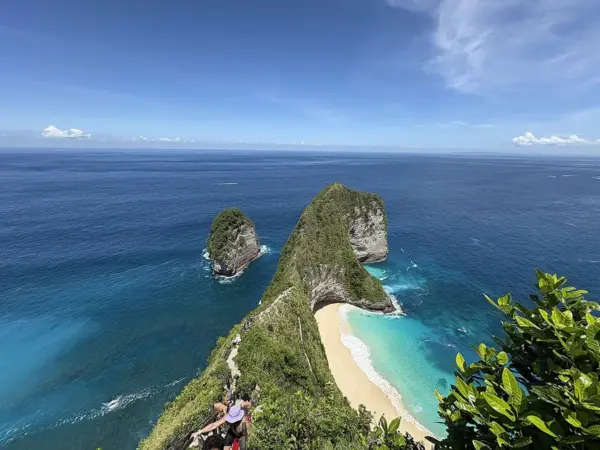
Nusa Penida: Kelingking Beach viewpoint. The path down to the beach is steep and only for confident hikers.
Tirta Empul and Gunung Kawi: a holy spring temple and rock-cut shrines near Tampaksiring.
Lesser-known corners
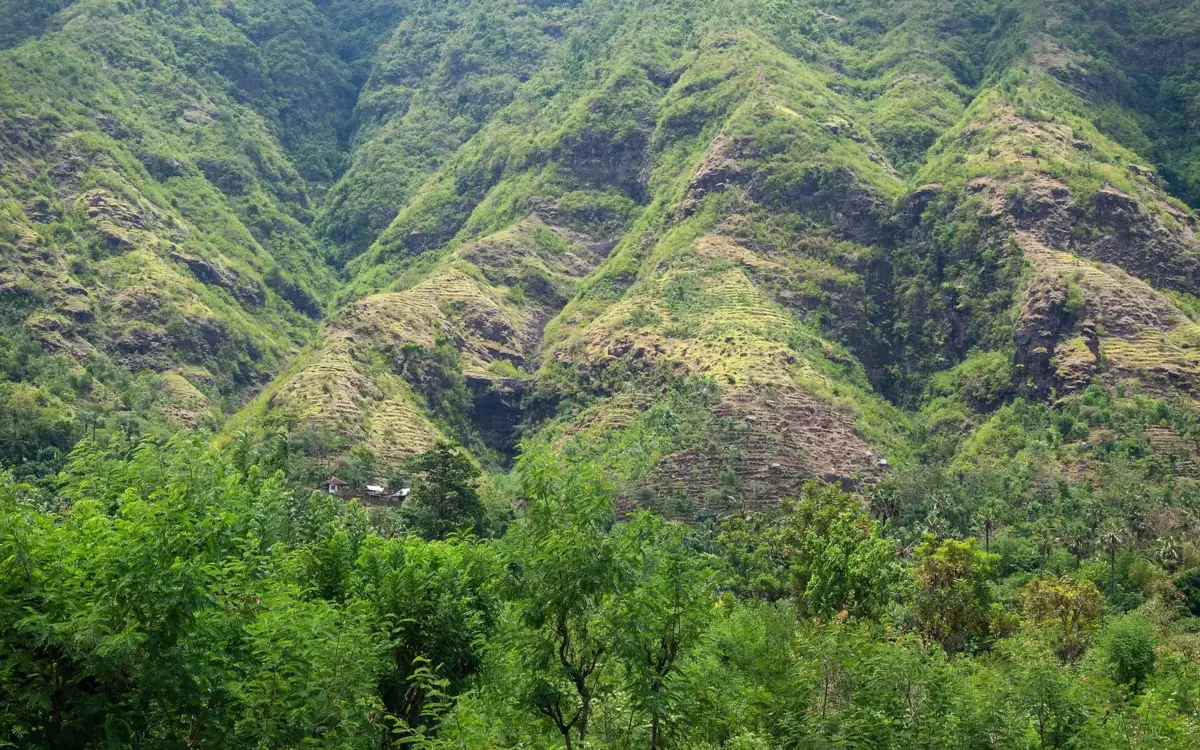
Jatiluwih: wide rice terraces that are part of the UNESCO-listed Subak cultural landscape, and less crowded than Tegallalang.
Sidemen: a green valley in East Bali with views of Mount Agung on clear mornings.
Pura Luhur Batukaru: a forest temple on Mount Batukaru’s slopes, usually quiet.
Lake Tamblingan and Munduk: cool, misty highlands with waterfalls and coffee farms.
Amed: a slow fishing-village coast for snorkelling in East Bali.
History and culture
Bali kept its Hindu traditions as Islam spread across Java. Village life still revolves around the banjar (local community), temple festivals and the subak, a cooperative water system for the rice fields that dates back about a thousand years and is listed by UNESCO. The Balinese use the 210-day Pawukon calendar alongside the lunar calendar. That’s why festivals such as Galungan move around the Gregorian calendar: in 2026 it fell on 17 June, and the next one is 13 January 2027. Nyepi, the Day of Silence and the Saka New Year, falls in March. On Nyepi the whole island, including the airport, shuts down for 24 hours.
Festivals and events
Pagerwesi (4 November 2026): a Hindu holy day four days after Saraswati (31 October 2026), celebrated most visibly in Buleleng in the north.
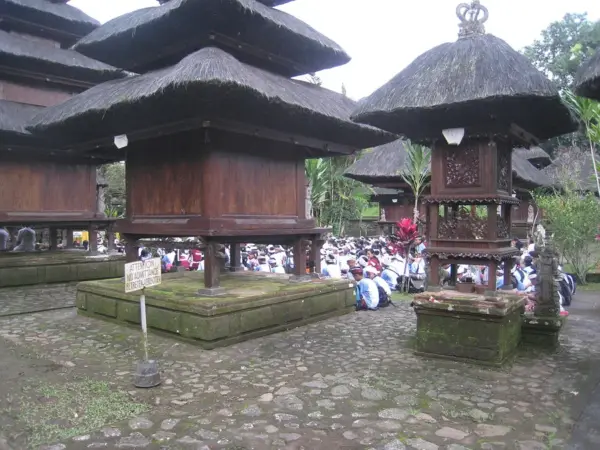
Temple anniversaries (odalan): held year-round. If you come across a procession, step aside and don’t walk in front of people praying.
Galungan and Kuningan: 13 and 23 January 2027, with bamboo penjor poles lining the streets.
Nyepi: in March. Plan around the island-wide shutdown.
A short first look: the south coast, Ubud and one sea temple. Base yourself in one place to save time in traffic.
Day 1: Arrive and Uluwatu
Morning: Land at Ngurah Rai (DPS), pay the levy if you haven’t, and check in around Jimbaran or Seminyak.
Afternoon: Rest, then the beach.
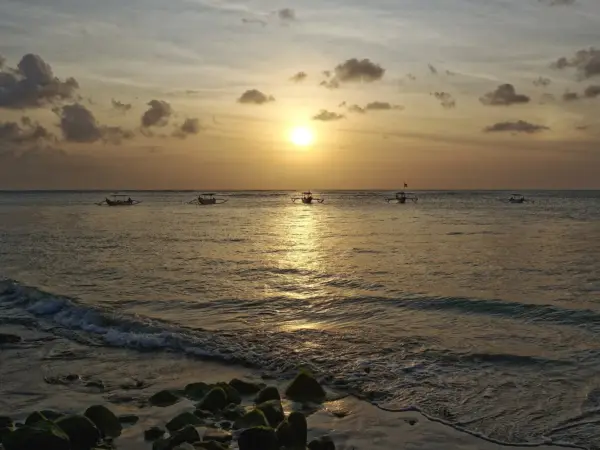
Evening: Uluwatu Temple at sunset; the Kecak dance is a separate ticket.
Est. cost: ₹3,000–9,000 per person (approx.)
Day 2: Ubud day
Morning: Early drive to the Tegallalang rice terraces before the crowds.
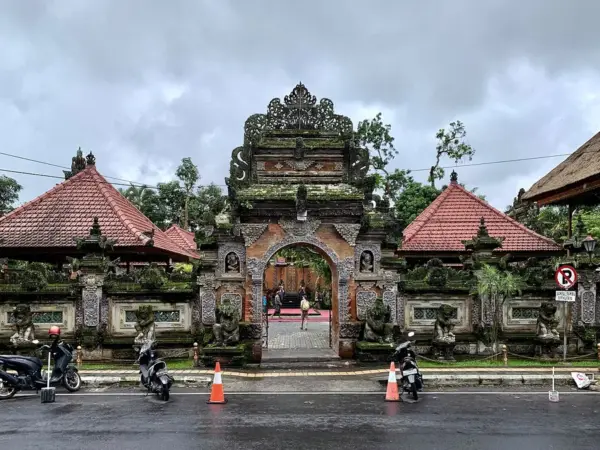
Afternoon: Sacred Monkey Forest and Ubud Palace; lunch at a warung.
Evening: A Legong or Kecak performance in Ubud, then back to base.
Est. cost: ₹3,000–9,000 per person (approx.)
Day 3: Tanah Lot and fly home
Morning: Slow breakfast and the beach.
Afternoon: Tanah Lot (check the tide) on the way north-west, or souvenir shopping.
Evening: Airport; allow plenty of time for traffic.
Est. cost: ₹2,000–7,000 per person (approx.)
5 days
Two bases: the coast and Ubud, with the central highlands as a day trip.
Day 1: Arrive in the south
Morning: Land at DPS and transfer to Seminyak, Sanur or Jimbaran.
Afternoon: Beach time.
Evening: Seafood dinner on Jimbaran beach.
Est. cost: ₹3,000–9,000 per person (approx.)
Day 2: Uluwatu and the Bukit
Morning: Beaches on the Bukit Peninsula.
Afternoon: Uluwatu Temple; keep sunglasses and phones away from the monkeys.
Evening: Sunset and the Kecak dance.
Est. cost: ₹3,500–10,000 per person (approx.)
Day 3: Move to Ubud
Morning: Drive to Ubud (often 1–2 hours in traffic).
Afternoon: Campuhan Ridge Walk and Pura Taman Saraswati.
Evening: Dance performance in Ubud.
Est. cost: ₹3,000–9,000 per person (approx.)
Day 4: Highlands day
Morning: Early start for Jatiluwih’s UNESCO-listed rice terraces.
Afternoon: Pura Ulun Danu Beratan on Lake Beratan (cooler, often misty).
Evening: Back to Ubud.
Est. cost: ₹3,500–10,000 per person (approx.)
Day 5: Temples and departure
Morning: Tirta Empul water temple or Gunung Kawi near Tampaksiring.
Afternoon: Ubud Art Market, then lunch.
Evening: Transfer to the airport.
Est. cost: ₹2,500–8,000 per person (approx.)
7 days
The south, Ubud, a Nusa Penida day trip and quiet East Bali.
Day 1: Arrive
Morning: Land at DPS.
Afternoon: Check in at Sanur, handy for Nusa Penida boats.
Evening: Beach walk along the Sanur path.
Est. cost: ₹3,000–9,000 per person (approx.)
Day 2: Nusa Penida
Morning: Fast boat from Sanur (roughly 30–45 minutes; seas can be choppy in the wet season).
Afternoon: Kelingking viewpoint and one or two west-coast stops with a local driver.
Evening: Boat back to Sanur.
Est. cost: ₹4,500–12,000 per person (approx.)
Day 3: To Ubud
Morning: Drive to Ubud.
Afternoon: Sacred Monkey Forest and Ubud Palace.
Evening: Dance performance.
Est. cost: ₹3,000–9,000 per person (approx.)
Day 4: Rice and water temples
Morning: Tegallalang terraces early.
Afternoon: Tirta Empul and Gunung Kawi.
Evening: Dinner in Ubud.
Est. cost: ₹3,000–9,000 per person (approx.)
Day 5: Mount Batur or a slow day
Morning: Optional pre-dawn Mount Batur sunrise hike with a local guide.
Afternoon: Rest, or a cooking class.
Evening: Early night.
Est. cost: ₹3,000–10,000 per person (approx.)
Day 6: East Bali
Morning: Drive to Sidemen’s rice valleys.
Afternoon: Tirta Gangga water palace or the coast at Amed.
Evening: Overnight in Sidemen or back to the south.
Est. cost: ₹3,000–9,000 per person (approx.)
Day 7: Tanah Lot and home
Morning: Back towards the airport.
Afternoon: Tanah Lot if time and traffic allow.
Evening: Fly home.
Est. cost: ₹2,500–8,000 per person (approx.)
Family with kids
Short drives, calm beaches and animals, with one base in Sanur.
Day 1: Arrive in Sanur
Morning: Land at DPS; Sanur is usually a short drive.
Afternoon: Pool time.
Evening: Sanur’s calm beach at dusk.
Est. cost: ₹4,000–12,000 per person (approx.)
Day 2: Animals
Morning: Bali Bird Park or Bali Safari and Marine Park.
Afternoon: Rest in the heat of the day.
Evening: Early dinner.
Est. cost: ₹5,000–14,000 per person (approx.)
Day 3: Ubud
Morning: Sacred Monkey Forest (hold hands, no food or bags with snacks).
Afternoon: Rice terraces and lunch.
Evening: Back to Sanur.
Est. cost: ₹4,000–12,000 per person (approx.)
Day 4: Beach and home
Morning: Swim at Sanur where the reef keeps waves small.
Afternoon: Lunch.
Evening: Airport.
Est. cost: ₹3,000–9,000 per person (approx.)
Couples
Cliffs, rice fields and quiet villages.
Day 1: Uluwatu
Morning: Check in on the Bukit Peninsula.
Afternoon: Beach day.
Evening: Uluwatu Temple at sunset and dinner with a view.
Est. cost: ₹6,000–18,000 per person (approx.)
Day 2: Ubud
Morning: Move to a villa near Ubud.
Afternoon: Campuhan Ridge Walk.
Evening: Spa and dinner.
Est. cost: ₹6,000–18,000 per person (approx.)
Day 3: Highlands
Morning: Jatiluwih terraces.
Afternoon: Ulun Danu Beratan.
Evening: Back to Ubud.
Est. cost: ₹6,000–18,000 per person (approx.)
Day 4: Sidemen
Morning: Drive to Sidemen.
Afternoon: Walk the rice valley.
Evening: Quiet night in the hills.
Est. cost: ₹5,000–15,000 per person (approx.)
Budget backpacker
Guesthouses, warungs and a rented scooter (only with an International Driving Permit).
Day 1: Canggu or Kuta
Morning: Ride-hailing from the airport to a hostel.
Afternoon: Beach and a beginner surf lesson.
Evening: Warung dinner.
Est. cost: ₹2,000–4,500 per person (approx.)
Day 2: Ubud
Morning: Shared shuttle or ride-hailing to Ubud.
Afternoon: Campuhan Ridge Walk (free) and the Ubud market.
Evening: Cheap guesthouse in Ubud.
Est. cost: ₹2,000–4,500 per person (approx.)
Day 3: Rice terraces
Morning: Tegallalang early.
Afternoon: Tirta Empul.
Evening: Back to the south or onward to Nusa Penida.
Est. cost: ₹2,000–4,500 per person (approx.)
Luxury
Cliff-top and jungle resorts with a private driver.
Day 1: Bukit Peninsula
Morning: Private transfer to a cliff-top resort.
Afternoon: Spa.
Evening: Uluwatu sunset and fine dining.
Est. cost: ₹20,000–60,000 per person (approx.)
Day 2: Ubud
Morning: Private driver to a jungle-valley resort.
Afternoon: Private temple and art tour with a guide.
Evening: Tasting menu.
Est. cost: ₹20,000–60,000 per person (approx.)
Day 3: Nusa Penida
Morning: Private boat to Nusa Penida.
Afternoon: Snorkelling (manta trips run in suitable conditions).
Evening: Back to the resort.
Est. cost: ₹25,000–65,000 per person (approx.)
Where to stay
Seminyak and Canggu: cafés, beach clubs and villas. Canggu suits surfers and long-stay remote workers.
Sanur: calm water and a beach path, good for families and for Nusa Penida boats.
Jimbaran and the Bukit (Uluwatu): resorts, clifftop views and surf beaches.
Ubud: culture, rice fields and yoga, from guesthouses to valley resorts.
Sidemen or Munduk: for a quiet night or two in the hills.
Where to eat and what to order
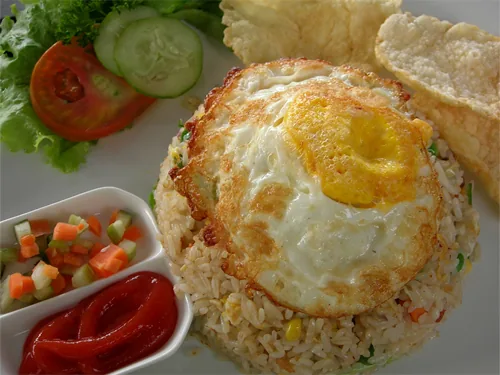
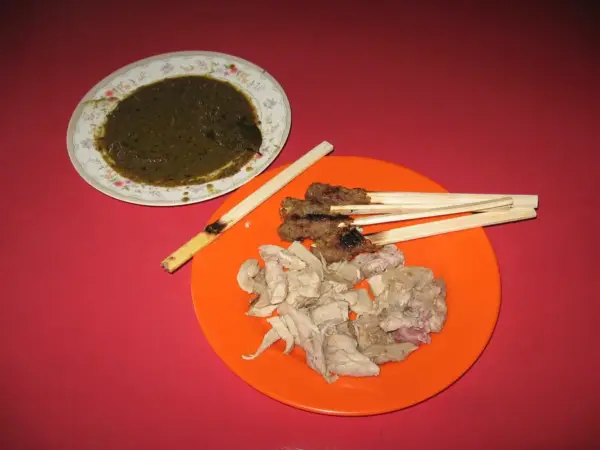
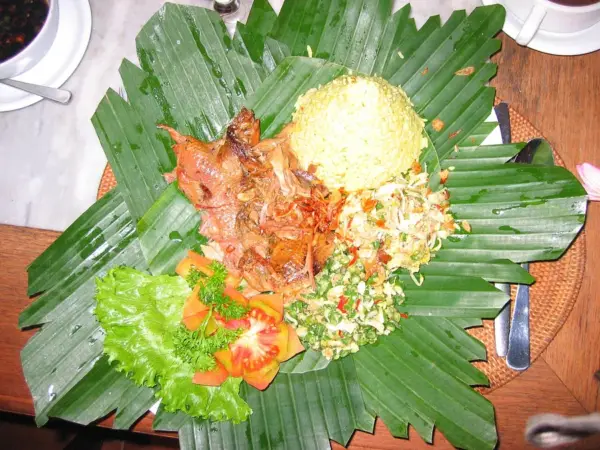
A warung is a small local eatery, and it’s where the best-value meals are. Try nasi campur (rice with small portions of several dishes), nasi goreng and mie goreng (fried rice and noodles), sate lilit (minced fish or meat wrapped on lemongrass), and bebek or ayam betutu (slow-cooked spiced duck or chicken). Babi guling (roast suckling pig) is a Balinese classic, so skip it if you don’t eat pork. Jimbaran’s beachfront seafood grills are a sunset ritual; agree the price by weight before you order. Many restaurants add tax and service to the bill, so check the menu.
Finding Indian and vegetarian food
Vegetarians do fine: tempeh and tofu are everywhere, and Ubud especially has many vegetarian and vegan cafés. Say saya vegetarian or tanpa daging (without meat). Note that sambal and some dishes use shrimp paste (terasi), so ask for tanpa terasi. Jain travellers can ask for tanpa bawang (no onion or garlic). Indian restaurants are easy to find in the Kuta–Seminyak belt and Ubud through map apps. Check recent reviews rather than relying on any list.
What to buy
Look for woodcarving, silver from the Celuk area, ikat and batik textiles, and Bali coffee. Ubud Art Market and the traditional market at Sukawati are the usual places to browse and bargain politely. Fixed-price shops in Ubud and Seminyak suit you if you’d rather not haggle.
Money, cards and INR conversion
You’ll pay in rupiah. ₹1 was about IDR 191 on 2 November 2026 (approximate ECB reference rate), so IDR 100,000 is roughly ₹520. Cards work in hotels, malls and most cafés, but warungs, markets, temple gates and parking need cash. Use ATMs inside banks or malls, and change money only at authorised money changers; avoid “no commission” booths with too-good rates. A forex card or a card with low foreign-transaction fees saves money.
Budget breakdown
These are per-person daily costs in rupees. Plug your own dates and style into our budget calculator.
Budget
Comfort
Luxury
Stay
₹800–₹2,000
₹3,000–₹7,000
₹12,000–₹40,000
Food
₹500–₹1,000
₹1,200–₹2,500
₹3,000–₹8,000
Local transport
₹300–₹800
₹1,000–₹2,500
₹2,500–₹6,000
Activities & entry fees
₹300–₹1,000
₹800–₹2,500
₹2,500–₹8,000
Total per day
₹1,900–₹4,800
₹6,000–₹14,500
₹20,000–₹62,000
BuzzyTrip estimates per person per day for November 2026, two people sharing, at about ₹1 = IDR 191 (ECB reference rate, 2 November 2026; your card or forex rate will differ). Budget means guesthouses or hostels, warung meals and ride-hailing or a rented scooter; comfort means a 3–4 star hotel or pool villa, cafés and a hired car with driver on sightseeing days; luxury means 5-star resorts, fine dining and private guides. Flights, the e-VOA (IDR 500,000), the Bali levy (IDR 150,000) and travel insurance are not included.
SIM, eSIM and staying connected
Tourist SIMs from Telkomsel, XL and Indosat are sold at the airport, and you’ll need your passport to register. eSIMs from local and international providers work if your phone supports them. Indian roaming packs are convenient but cost more. Wi-Fi is standard in hotels and cafés.
Plugs and voltage
Indonesia uses Type C and Type F sockets at 230 V. Indian two-pin plugs usually fit, but three-pin plugs don’t, so pack a universal adapter.
What to avoid: scams and safety
Rabies is present in Bali. Don’t touch dogs or monkeys, and get medical care the same day if you’re bitten or scratched. Ask a travel clinic about pre-exposure vaccination.
Drink bottled or filtered water, and avoid unbranded arak (local spirit), as methanol poisoning cases have been reported.
Swim only where it’s patrolled; rip currents are common on the west coast.
Use official .go.id sites for the visa, arrival card and levy.
Bag snatching from scooters happens, so carry your phone on the side away from the road.
Emergency number: 112.
Do’s and don’ts
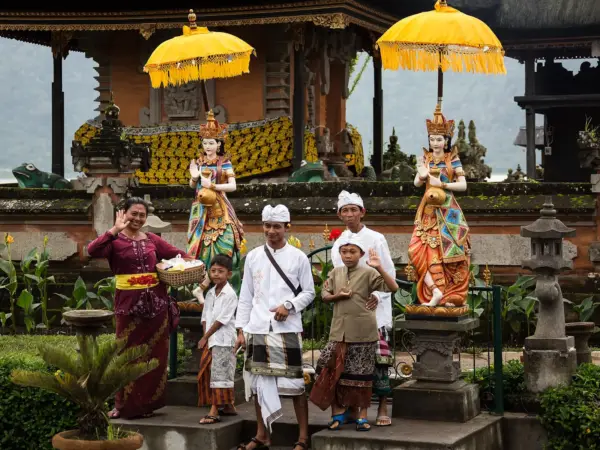
Do wear a sarong and sash at temples, with shoulders covered.
Do step around the small offerings (canang sari) on pavements.
Don’t climb on shrines or pose disrespectfully at temples; Bali has deported visitors for this.
Don’t enter temples where signs ask visitors to stay out, including inner sanctums.
Don’t ride a scooter without a licence that covers motorcycles.
Local etiquette
Bali is relaxed but devout. Greet people with Om Swastiastu and a smile. Use your right hand to give and receive, and don’t point your feet at people or shrines. Dress modestly away from the beach. Temples have their own rules, which are posted at the entrance. Women who are menstruating are traditionally asked not to enter. Tipping isn’t compulsory, but rounding up for drivers and guides is appreciated.
Myths vs facts
Myth: the Bali levy is optional. Fact: every foreign tourist is meant to pay IDR 150,000 per trip.
Myth: Indians get visa-free entry to Indonesia. Fact: you need a paid visa on arrival or e-VOA (IDR 500,000).
Myth: Galungan is always in April or May. Fact: it follows a 210-day cycle; the next one is 13 January 2027.
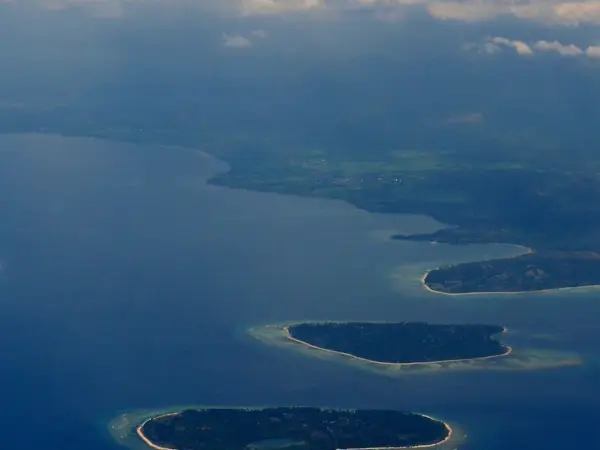
Myth: Lombok and the Gilis are part of Bali. Fact: they’re in the neighbouring province of West Nusa Tenggara, a boat ride or short flight away.
Packing list
Light cottons, a compact umbrella or rain jacket, and quick-dry clothes for November showers.
A sarong or a shawl that covers your shoulders for temples (many temples also lend one).
Sandals plus closed shoes for Mount Batur or Kelingking.
Sunscreen, insect repellent and a universal adapter.
Printed or offline copies of your e-VOA, levy voucher, arrival-card QR, insurance and bookings.
Travel insurance
Get a policy with medical and evacuation cover, and check that it includes scooter riding (with a valid licence), surfing, diving or volcano hikes if you plan them. Private hospitals in Bali expect payment or a guarantee from your insurer.
Yes. Indian passport holders can get Indonesia’s visa on arrival (B1), either online as an e-VOA at evisa.imigrasi.go.id before you fly or at the counter at Bali airport. It costs IDR 500,000 (about ₹2,600) and gives 30 days, extendable once for another 30 days. Use only the official site.
What else do I need before landing?
Your passport must be valid for at least 6 months from arrival. You’ll also need a return or onward ticket and the free All Indonesia arrival card, which covers customs and health. Fill it in online or in the app within 3 days (72 hours) before you arrive. Ignore sites that charge for it.
Is the Bali tourist levy compulsory?
Yes. Every foreign tourist pays IDR 150,000 (about ₹790) once per trip, on top of the visa. Pay on the official Love Bali website or app before you fly to get a QR voucher by email, or pay at the counters at Bali’s airport and ports.
Are there direct flights from India to Bali?
Yes. As of November 2026, Air India and IndiGo fly nonstop from Delhi, and IndiGo flies daily from Bengaluru (about 7 hours). IndiGo’s Mumbai flight currently stops en route, and a nonstop is planned for early 2027. Check the airline’s live schedule.
Is November a good time to visit Bali?
It works if you’re flexible. November is the start of the wet season. It’s hot (around 31°C) and humid, with more frequent afternoon or evening showers than in the dry months, but crowds are smaller than in July–August and at Christmas.
Are there Balinese festivals in November 2026?
Pagerwesi falls on 4 November 2026 and is celebrated most visibly in Buleleng in the north. Galungan isn’t in November this year: it was on 17 June 2026, and the next one is 13 January 2027, with Kuningan 10 days later. Nyepi, the Day of Silence, is in March, when the whole island including the airport shuts for a day.
What should I wear to temples?
Wear a sarong and sash, with your shoulders covered. Major temples such as Uluwatu lend or rent sarongs at the gate. Follow the signs at each temple, as some inner areas are closed to visitors.
Can I ride a scooter in Bali on my Indian licence?
Not on its own. You need an International Driving Permit that covers motorcycles, plus your Indian licence, and a helmet. Traffic in the south is heavy, so many visitors hire a car with a driver instead.
Sources and credits
We checked prices, permits, visas and routes against the official pages below in November 2026. Background facts also come from the Wikimedia pages listed, used under Creative Commons Attribution-ShareAlike. This guide is an original work written and edited for BuzzyTrip; fees, visa rules and timetables change, so verify before you travel.
Been here recently? Share a tip (and a photo) in the comments below and tick “This is a travel tip”. Tips are reviewed before they appear — we never show your email.


9 comments