Mauritius November guide:sun, spice & seaside walks
Mauritius for Indian travellers, fact-checked for November 2026: visa-free entry and the All-in-One form, MUR to INR at the 9 Nov rate, nonstop flights, Aapravasi Ghat, Ganga Talao, Chamarel and Le Morne, with realistic budgets and no impossible day trips.
Do Indian passport holders need a visa for Mauritius?No visa is needed in advance for a tourist trip. Mauritius lists India among visa-exempt countries, and immigration grants a stay on arrival — commonly up to 60 days (India's High Commission cites up to 90). Carry a passport valid at least six months, a return ticket, a hotel booking and proof of funds, and fill in the free All-in-One Travel Form and Health Declaration on safemauritius.govmu.org before you fly.Is November a good month for Mauritius?Yes, for most trips. November is the start of the warmer summer season, with coastal highs usually around 27–29 °C. It is still one of the drier months before the wetter January–March period. The cyclone season officially runs from November to April but peaks from January to March, so check the Mauritius Meteorological Services forecast before boat trips.How long is the flight from India?Nonstop flights from Mumbai take roughly six to six and a half hours. Air Mauritius flies nonstop from Mumbai several times a week and less often from Delhi and Chennai, and Air India also has nonstop services. Mauritius is 1.5 hours behind IST.What is the currency, and how much is ₹1 worth?The Mauritian rupee (MUR). On 9 November 2026, ₹1 was about MUR 0.51, so 1 MUR is about ₹1.96 (ExchangeRate-API reference). Cards work at hotels and larger shops; carry cash for buses, markets and street food.Can we get vegetarian and Indian food easily?Yes. About two-thirds of Mauritians have Indian roots, and dholl puri, farata, vegetable curries, gâteaux piments and biryani are everyday food. Vegetarian options are easy to find, and supermarkets stock familiar Indian groceries.
Plan my trip
Go-now score
Budget calculator
The full guide
Mauritius in November: Sun, Spice and Seaside Walks
By BuzzyTrip · Updated November 27, 2026
Currency: Mauritian rupee (MUR). ₹1 ≈ MUR 0.51, so 1 MUR ≈ ₹1.96 (ExchangeRate-API reference, 9 Nov 2026; your bank or forex-card rate will differ).
Plugs / voltage: Type C and Type G, 230 V, 50 Hz.
Visa: no visa needed in advance for Indian tourists; stay granted on arrival. Fill in the free All-in-One Travel Form first. Check the Passport and Immigration Office before you book.
Time: UTC+4, 1.5 hours behind IST.
Mauritius at a glance
Mauritius is a volcanic island of about 2,040 km² in the Indian Ocean, ringed by coral reefs and lagoons. Inland there are sugarcane fields, a cool central plateau and the forested Black River Gorges. For Indian travellers it feels unusually familiar: about two-thirds of Mauritians have Indian roots, Bhojpuri is still heard in villages, and dholl puri is the national street snack. Kreol, French and English are all spoken. We like it for an easy, visa-free week that mixes beaches with real history and short hikes. It is not a party island.
November is the start of the warmer summer season. Coastal highs are usually around 27–29 °C, the sea is warm, and it is still one of the drier months before the wetter January–March stretch. The south-west cyclone season officially runs from November to April but usually peaks from January to March. Even so, check the Mauritius Meteorological Services forecast before booking boat trips. Two dates matter for Indian visitors: 2 November is a public holiday marking the arrival of indentured labourers in 1834, and Divali (8 November in 2026) is also a public holiday, with clay lamps outside homes across the island.
History and culture
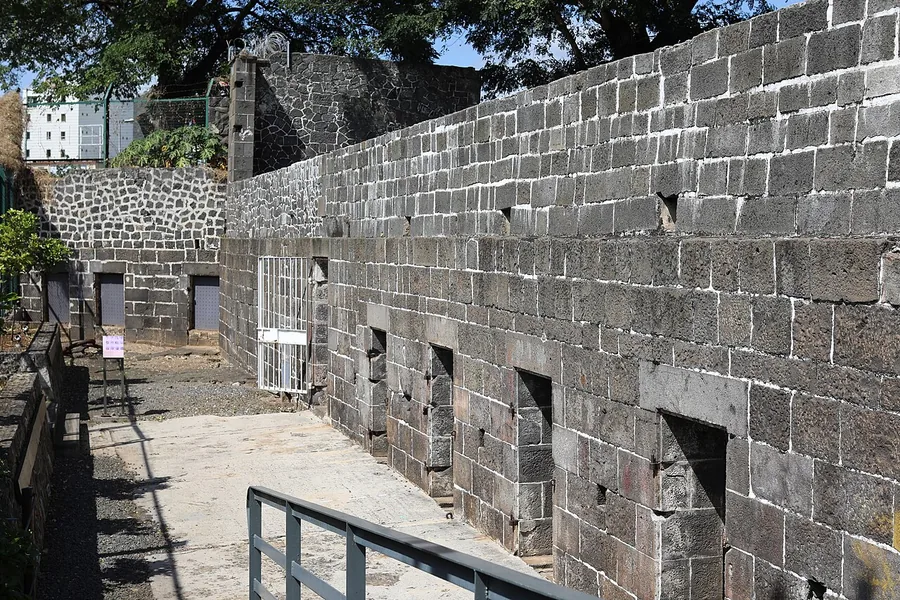
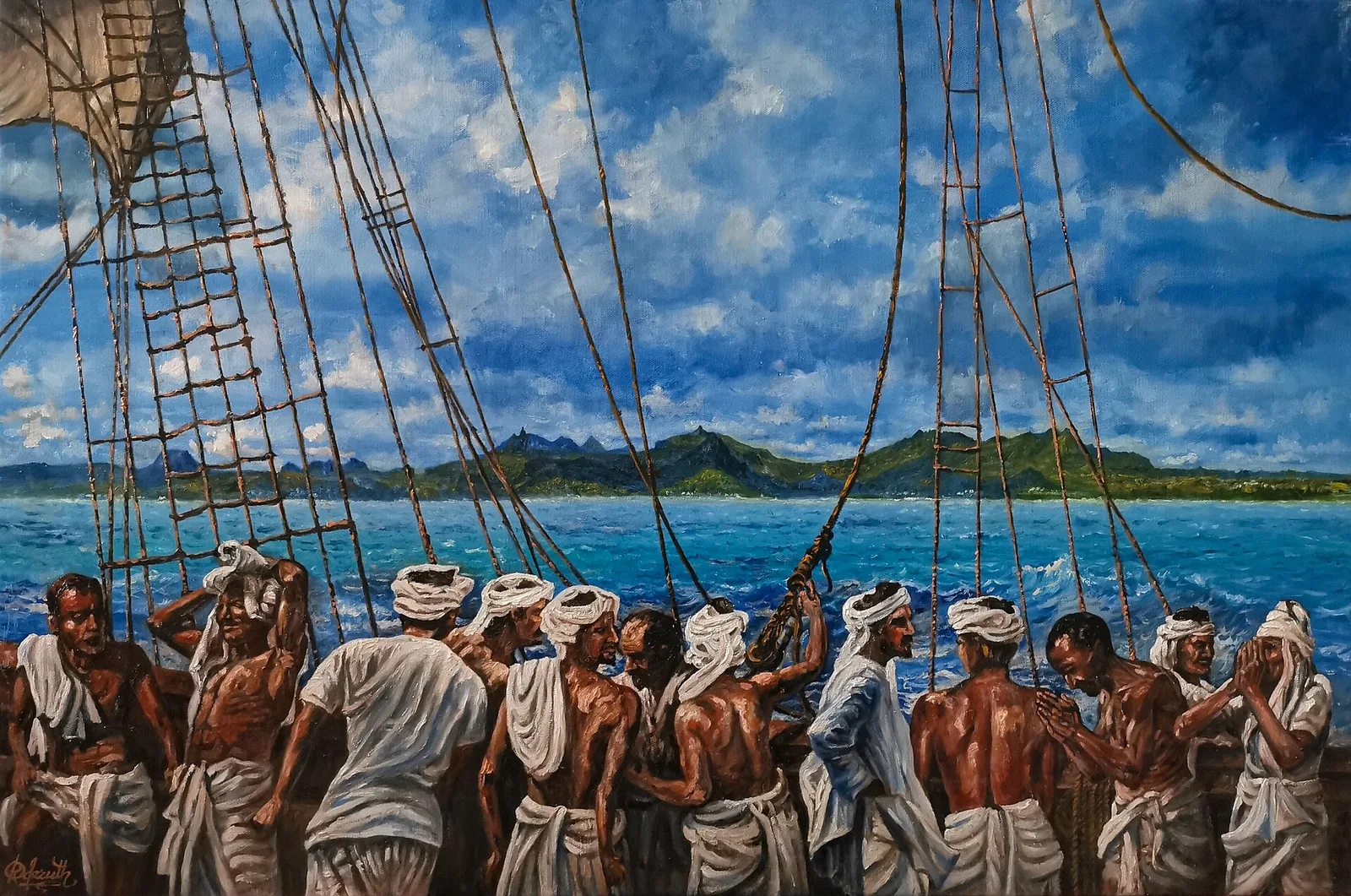
Arab and Portuguese sailors knew the island long before anyone settled it. The Dutch arrived in 1598, named it after Prince Maurice of Nassau and settled near Grand Port. They left in 1710, by which time the dodo was extinct. The French took over in 1715, founded Port Louis and ran sugar plantations worked by enslaved Africans and Malagasy people. The British captured the island in 1810. After slavery was abolished in 1835, about half a million indentured labourers, mostly from India, came through the Aapravasi Ghat depot in Port Louis between 1834 and 1920. The depot and the Le Morne cultural landscape, a refuge for escaped slaves, are both UNESCO World Heritage Sites. Mauritius became independent on 12 March 1968 and a republic in 1992.
May to November is the cooler, drier winter: good for hiking, with the west coast usually sunnier and calmer. December to April is hot and humid summer, with most of the year’s rain and any cyclones falling in January to March. September to November often gives the best balance of warm sea and lower rain. The east coast is breezier in winter thanks to the south-east trade winds. The central plateau around Curepipe is noticeably cooler and wetter all year, so carry a light layer.
Mauritius lists India among the countries whose citizens are exempt from a visa for short visits. You don’t apply in advance; the immigration officer grants permission to stay at the airport, commonly for up to 60 days (the Indian High Commission cites up to 90 days for tourists). Carry a passport valid for at least six months beyond your stay, a confirmed return ticket, a confirmed hotel booking and proof of funds (the airport operator lists about US$100 per day as the guide). All passengers must complete the free All-in-One Travel Form and Health Declaration before boarding, at safemauritius.govmu.org only — ignore paid third-party sites. Rules change, so check the Passport and Immigration Office before you travel, and see our visa-free countries for Indian passports list.
How to reach Mauritius
Distances from major Indian cities
From
Air distance (approx.)
Flight time (approx.)
Best way
Mumbai
~4,700 km
~6–6.5 h nonstop
Nonstop (Air Mauritius / Air India)
Delhi
~5,800 km
~7.5–8 h nonstop
Weekly nonstops or one stop
Chennai
~4,400 km
~6 h nonstop
Weekly Air Mauritius nonstop or one stop
Bengaluru
~4,300 km
~6 h
Check nonstops; otherwise one stop
Great-circle distances and typical block times; schedules change by season, so check airline timetables.
Everyone arrives at Sir Seewoosagur Ramgoolam International Airport (MRU) at Plaine Magnien in the south-east. Port Louis is about an hour’s drive away and Grand Baie about 1.5 hours. In the 2025–26 winter timetable, Air Mauritius flew nonstop from Mumbai three or four times a week and once a week each from Delhi and Chennai. Air India also lists nonstop services. One-stop options run via Dubai and other hubs. There is no sea route from India for travellers.
Getting around
Buses reach most towns and beaches cheaply, but they are slow and stop early in the evening. The Metro Express light rail runs from Port Louis to Curepipe via Rose-Hill and Quatre Bornes. It does not go to the airport, Grand Baie or the beach resorts. Taxis should be agreed in advance, and hotel taxis cost more. For flexibility, hire a car: Mauritius drives on the left, like India, and we suggest carrying an International Driving Permit along with your Indian licence (check your rental company’s rules).
Top things to do
Aapravasi Ghat, Port Louis: the UNESCO-listed immigration depot where many Indo-Mauritian families’ stories begin. It has a small interpretation centre.
SSR Botanic Garden, Pamplemousses: giant Victoria water lilies, talipot palms, spice trees and giant tortoises.
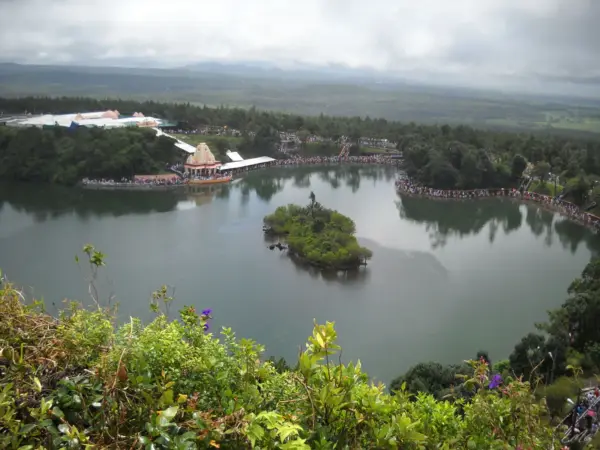
Ganga Talao (Grand Bassin): a crater-lake Hindu pilgrimage site with a giant Shiva statue at the entrance. It is busiest at Maha Shivaratri (February–March).
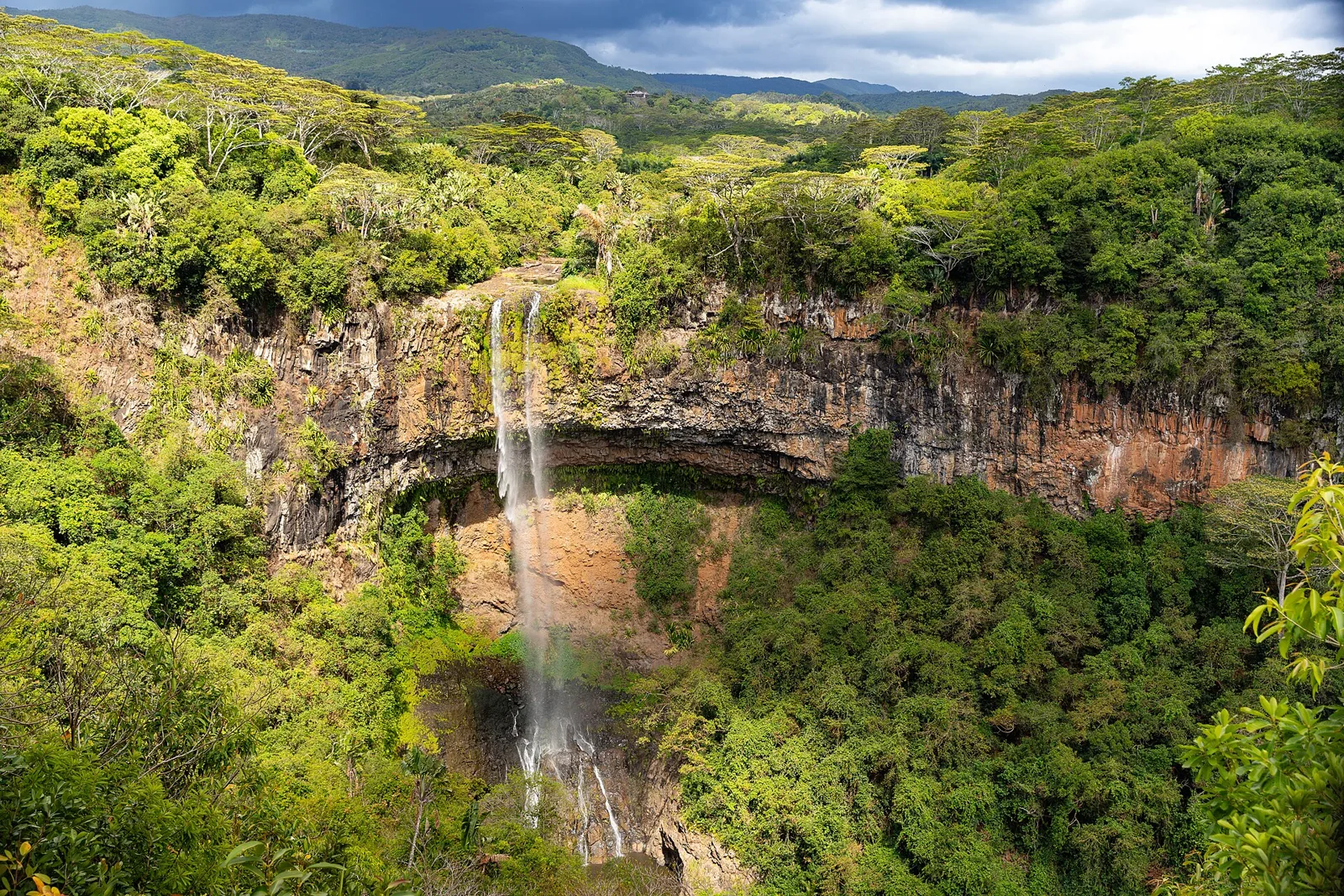
Chamarel: the island’s tallest waterfall and the Seven Coloured Earth dunes (both ticketed).
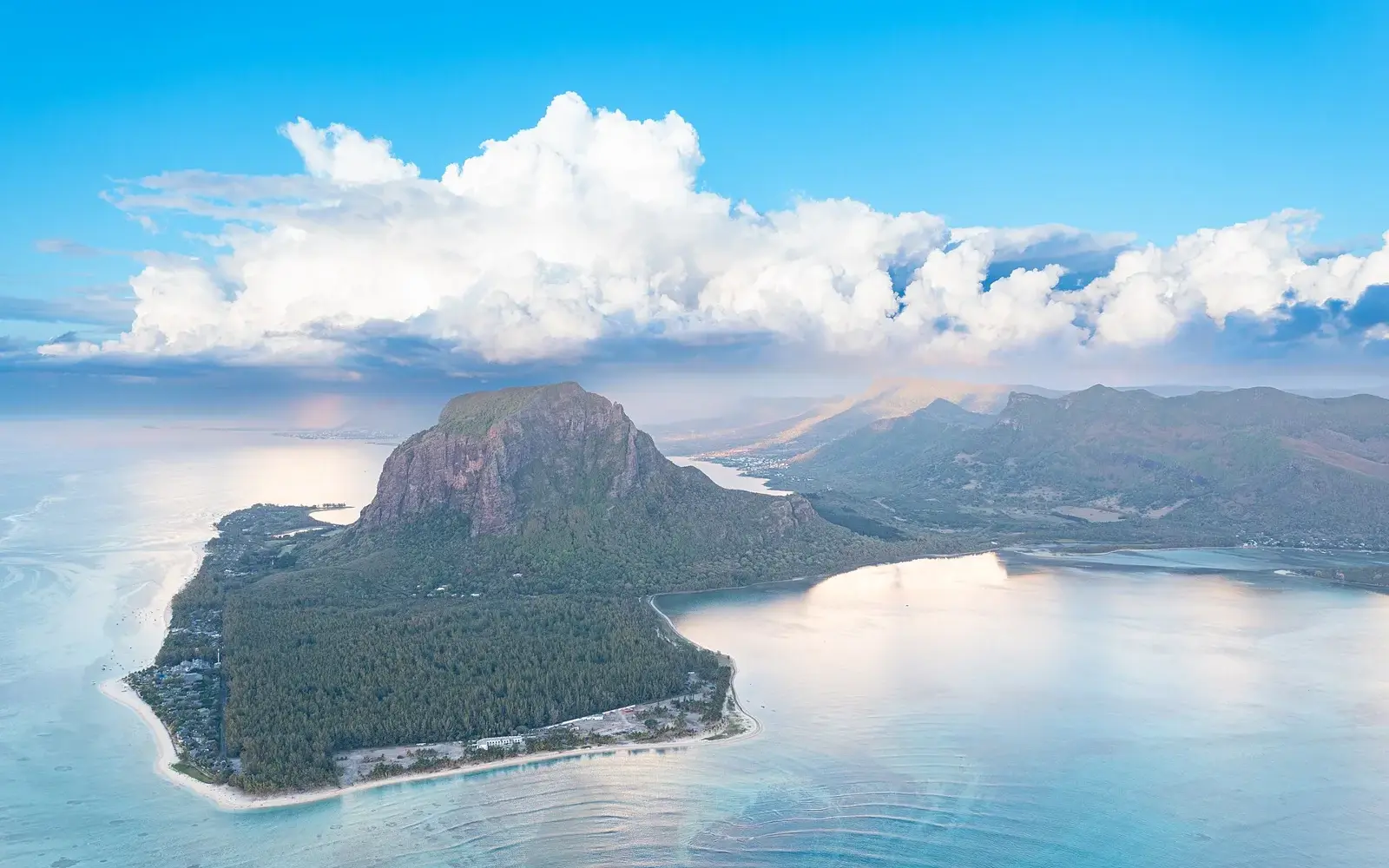
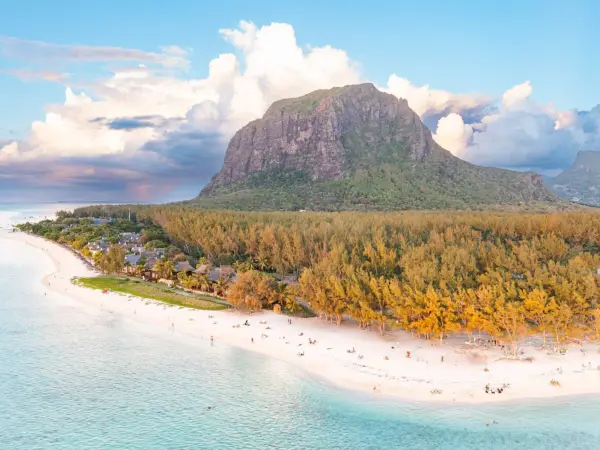
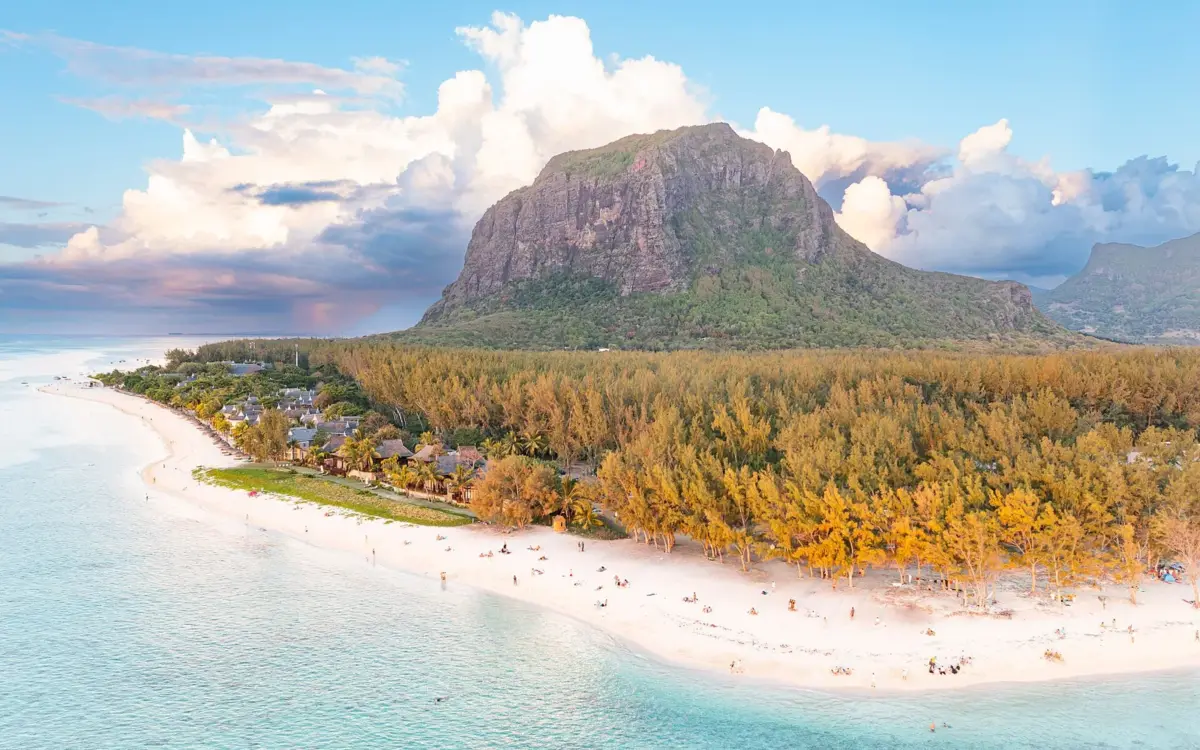
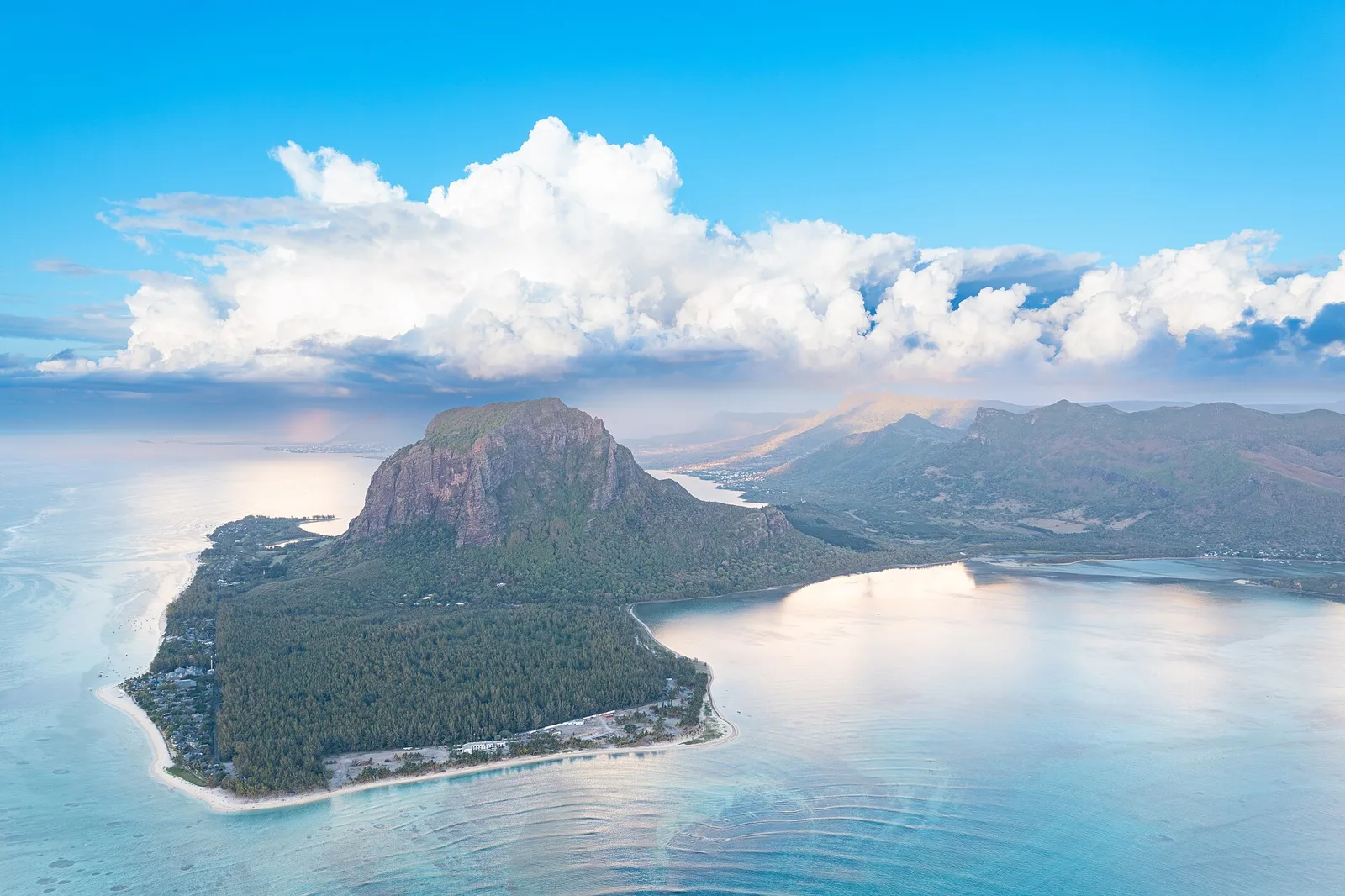
Le Morne: the UNESCO-listed mountain and one of the best public beaches.
Black River Gorges National Park: viewpoints and marked trails through native forest.
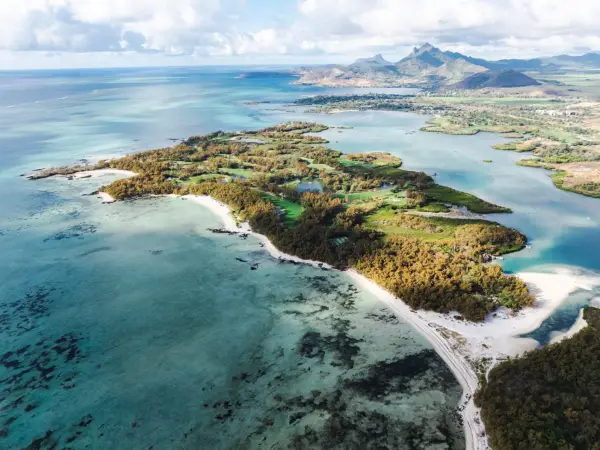
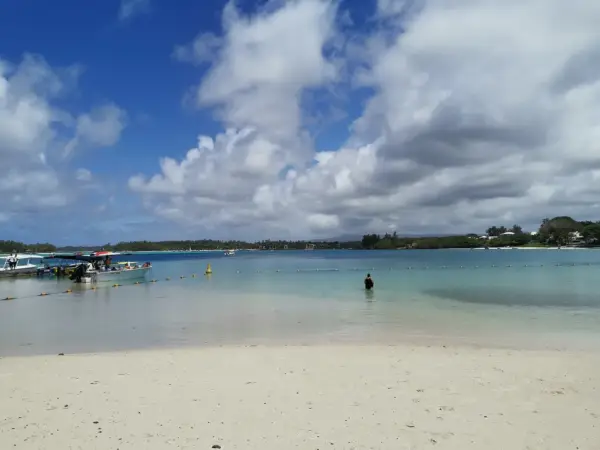
Île aux Cerfs and Blue Bay: lagoon swimming, glass-bottom boats and snorkelling.
Le Pouce: a short hike to an 812 m summit above Port Louis.
A morning at Aapravasi Ghat followed by dholl puri at the Central Market.
Sunset over the lagoon at Le Morne.
The view across the Black River Gorges from the Gorges viewpoint.
Lesser-known corners worth your time
Gris Gris, Souillac: wild cliffs on the south coast, where a gap in the reef lets the open ocean crash in. It is for viewing only, as swimming here is dangerous.
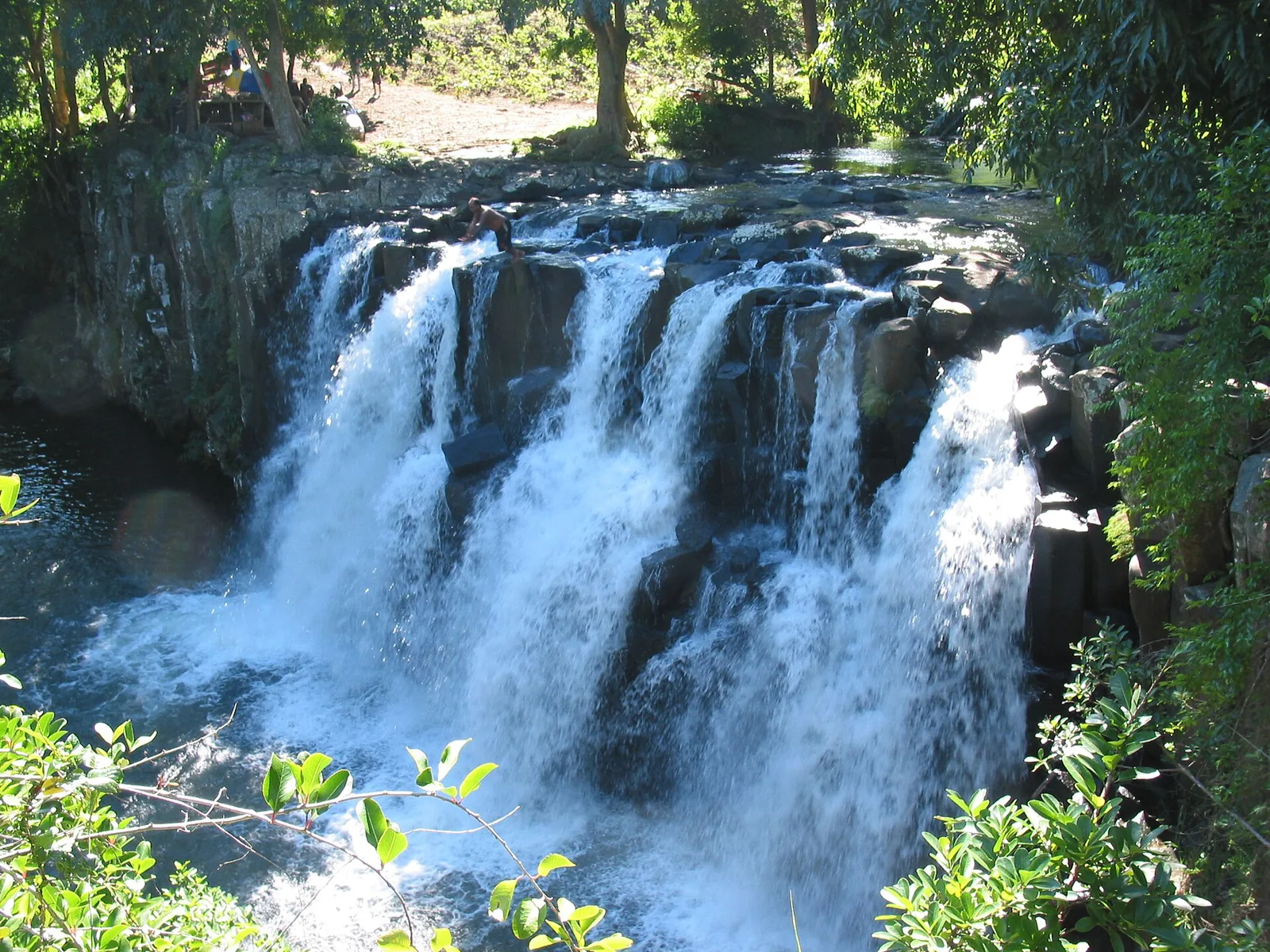
Rochester Falls: a small waterfall over basalt columns near Souillac.
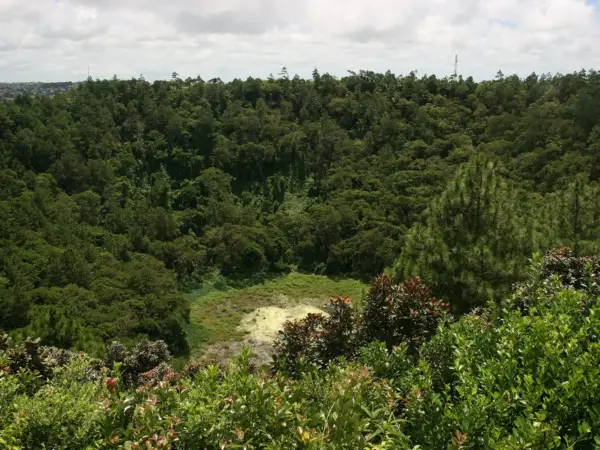
Trou aux Cerfs: a dormant volcanic crater in Curepipe with a ring road and views.
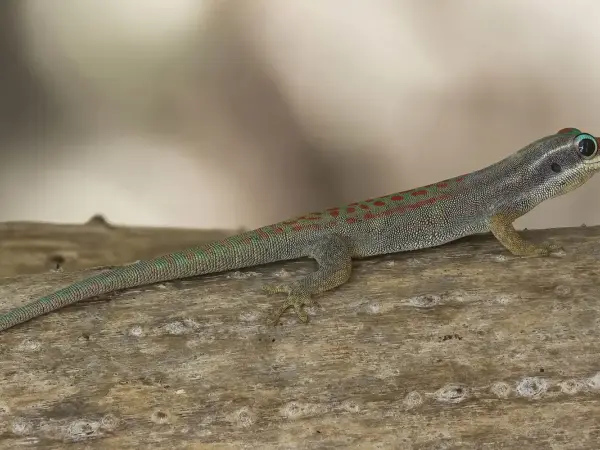
Île aux Aigrettes: an islet nature reserve off Mahébourg, visited on guided tours run by the Mauritian Wildlife Foundation, with endemic geckos and birds.
A short first taste: Port Louis heritage and a north-coast beach.
Day 1: Port Louis
Morning: Aapravasi Ghat, the UNESCO-listed depot where indentured labourers landed from 1834.
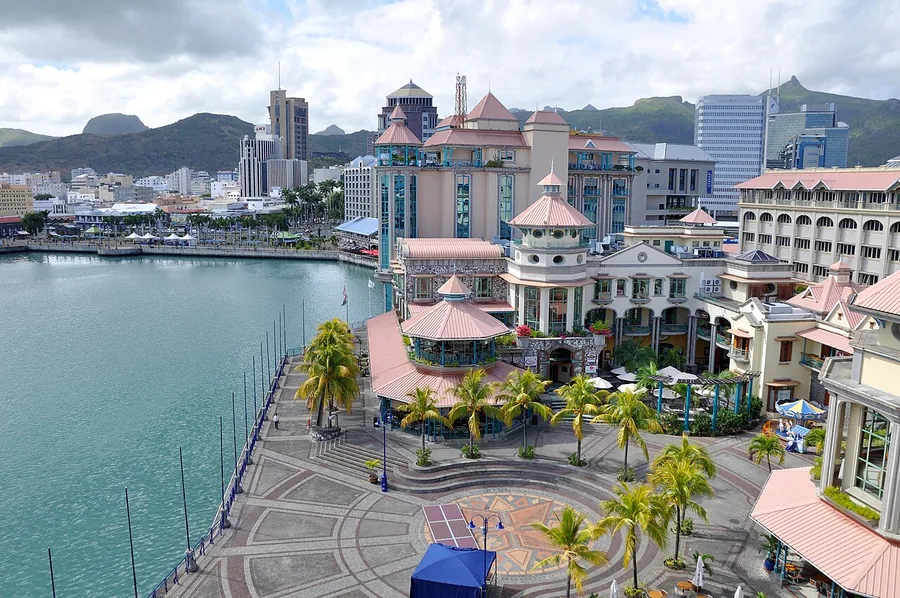
Afternoon: Central Market, then the Caudan Waterfront and the Blue Penny Museum.
Evening: Drive to Grand Baie (about 25 km) for dinner by the bay.
Est. cost: ₹6,000–10,000 per person (approx.)
Day 2: Pamplemousses and the beach
Morning: SSR Botanic Garden at Pamplemousses: giant water lilies, talipot palms and giant tortoises.
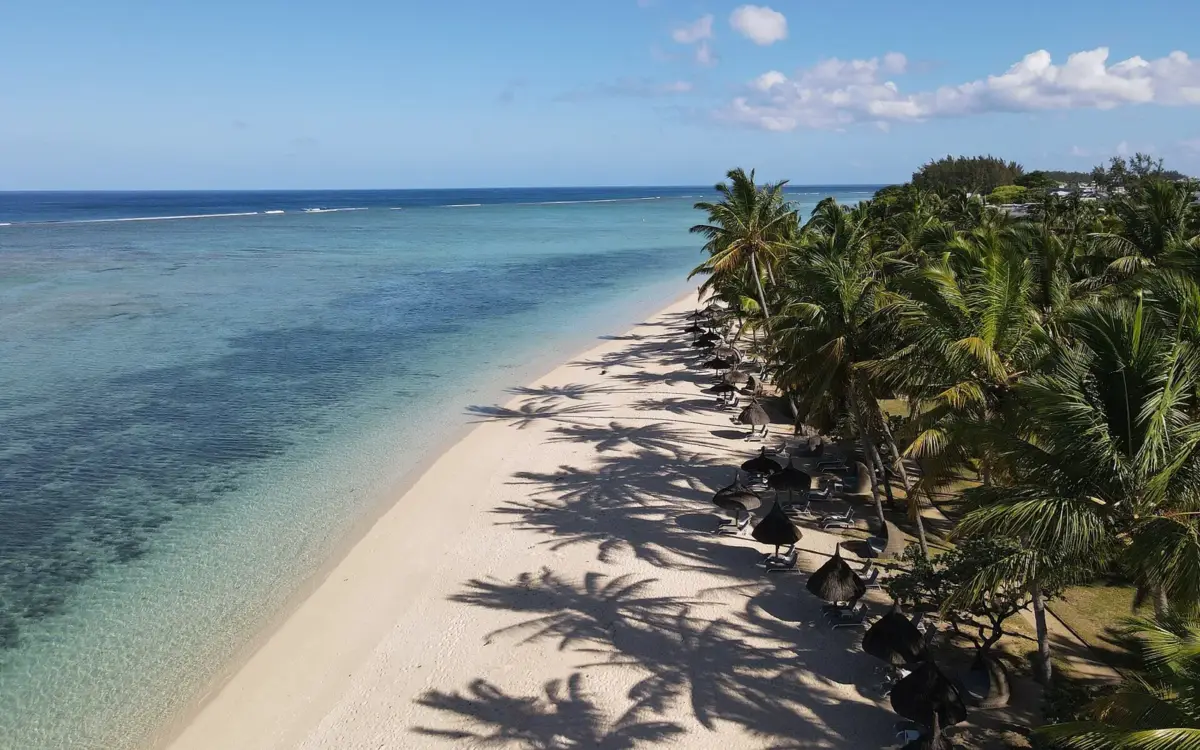
Afternoon: Swim at Pereybère public beach.
Evening: Head to the airport (about 1.5 hours from the north).
Est. cost: ₹5,000–9,000 per person (approx.)
3 days
North, the central plateau and the south-west in three easy days.
Day 1: Port Louis and the north
Morning: Aapravasi Ghat and Central Market.
Afternoon: SSR Botanic Garden, Pamplemousses.
Evening: Grand Baie or Pereybère.
Est. cost: ₹6,000–10,000 per person (approx.)
Day 2: Plateau and Ganga Talao
Morning: Trou aux Cerfs crater in Curepipe.
Afternoon: Ganga Talao (Grand Bassin) and the giant Shiva statue, then the Black River Gorges viewpoint.
Evening: Stay in the south-west (Flic en Flac or Le Morne area).
Est. cost: ₹6,500–11,000 per person (approx.)
Day 3: Chamarel and Le Morne
Morning: Chamarel waterfall and the Seven Coloured Earth (ticketed).
Afternoon: Le Morne public beach under the UNESCO-listed mountain.
Evening: Fly out, or stay on.
Est. cost: ₹6,000–10,000 per person (approx.)
5 days
Add the east-coast lagoon and a hike.
Day 1: Arrive in the south-east
Morning: Land at SSR International (Plaine Magnien).
Afternoon: Blue Bay Marine Park by glass-bottom boat or snorkel.
Evening: Mahébourg waterfront.
Est. cost: ₹6,000–10,000 per person (approx.)
Day 2: Île aux Cerfs
Morning: Boat from Trou d’Eau Douce to Île aux Cerfs.
Afternoon: Lagoon swim; Belle Mare beach on the way back.
Evening: East-coast dinner.
Est. cost: ₹7,000–12,000 per person (approx.)
Day 3: Port Louis and Le Pouce
Morning: Early Le Pouce hike (812 m; allow about 2–3 hours return from the usual trailhead), with a local guide if you are unsure of the route.
Afternoon: Aapravasi Ghat and the Natural History Museum (home of the dodo display).
Evening: Caudan Waterfront.
Est. cost: ₹5,500–9,500 per person (approx.)
Day 4: Plateau and Black River Gorges
Morning: Trou aux Cerfs and Ganga Talao.
Afternoon: Black River Gorges National Park viewpoints or a marked trail.
Evening: Stay on the west coast.
Est. cost: ₹6,000–10,500 per person (approx.)
Day 5: Chamarel and Le Morne
Morning: Chamarel falls and Seven Coloured Earth.
Afternoon: Le Morne beach.
Evening: Sunset, then departure or an extra night.
Est. cost: ₹6,000–10,000 per person (approx.)
7 days
The whole island at an unhurried pace, with an optional Rodrigues add-on by air.
Day 1: Arrive and rest
Morning: Land and transfer to the east coast.
Afternoon: Belle Mare beach.
Evening: Early night.
Est. cost: ₹6,000–10,000 per person (approx.)
Day 2: Île aux Cerfs
Morning: Boat from Trou d’Eau Douce.
Afternoon: Lagoon time.
Evening: East-coast dinner.
Est. cost: ₹7,000–12,000 per person (approx.)
Day 3: South-east
Morning: Île aux Aigrettes guided nature tour (Mauritian Wildlife Foundation).
Afternoon: Blue Bay snorkel.
Evening: Mahébourg.
Est. cost: ₹6,500–11,000 per person (approx.)
Day 4: Wild south
Morning: Gris Gris cliffs and Rochester Falls near Souillac (no swimming at Gris Gris).
Afternoon: Ganga Talao.
Evening: Move to the south-west.
Est. cost: ₹6,000–10,000 per person (approx.)
Day 5: Chamarel and Le Morne
Morning: Chamarel falls and Seven Coloured Earth.
Afternoon: Le Morne beach.
Evening: Sunset over the lagoon.
Est. cost: ₹6,000–10,000 per person (approx.)
Day 6: Port Louis and Pamplemousses
Morning: Aapravasi Ghat and Central Market.
Afternoon: SSR Botanic Garden.
Evening: Stay in the north (Grand Baie).
Est. cost: ₹6,000–10,000 per person (approx.)
Day 7: North coast
Morning: Catamaran day to the northern islets with a licensed operator, if the sea is calm.
Afternoon: Pereybère beach.
Evening: Departure. (Rodrigues, 1.5 hours away by air, needs at least two extra nights.)
Est. cost: ₹6,500–12,000 per person (approx.)
Family with kids
Calm lagoons, tortoises and short drives.
Day 1: Beach base
Morning: Transfer to a north or east-coast hotel.
Afternoon: Calm lagoon swimming (check the flags).
Evening: Early dinner.
Est. cost: ₹7,000–12,000 per person (approx.)
Day 2: Pamplemousses
Morning: Giant lilies and tortoises at the SSR Botanic Garden.
Afternoon: Back to the beach.
Evening: Grand Baie promenade.
Est. cost: ₹6,000–10,000 per person (approx.)
Day 3: Blue Bay
Morning: Glass-bottom boat at Blue Bay Marine Park.
Afternoon: Mahébourg waterfront.
Evening: Fly home.
Est. cost: ₹6,500–11,000 per person (approx.)
Couples
Sunsets, a lagoon island and the wild south-west.
Day 1: Le Morne
Morning: Check in on the south-west coast.
Afternoon: Le Morne beach.
Evening: Sunset from Flic en Flac.
Est. cost: ₹10,000–18,000 per person (approx.)
Day 2: Chamarel
Morning: Chamarel falls and Seven Coloured Earth.
Afternoon: Black River Gorges viewpoint.
Evening: Dinner in Chamarel village.
Est. cost: ₹9,000–16,000 per person (approx.)
Day 3: Île aux Cerfs
Morning: Cross to the east coast for Île aux Cerfs.
Afternoon: Lagoon afternoon.
Evening: Departure.
Est. cost: ₹9,000–16,000 per person (approx.)
Budget backpacker
Public buses, the Metro Express and street food.
Day 1: Port Louis on foot
Morning: Bus from the airport to Port Louis via Mahébourg or Rose-Hill.
Afternoon: Aapravasi Ghat (free) and Central Market dholl puri.
Evening: Guesthouse night.
Est. cost: ₹3,000–5,000 per person (approx.)
Day 2: Plateau by Metro
Morning: Metro Express to Curepipe for Trou aux Cerfs.
Afternoon: Bus towards Grand Bassin for Ganga Talao.
Evening: Back to base.
Est. cost: ₹2,800–4,800 per person (approx.)
Day 3: Beach by bus
Morning: Bus to Flic en Flac public beach.
Afternoon: Picnic of gâteaux piments and farata.
Evening: Bus back and fly out.
Est. cost: ₹2,800–4,800 per person (approx.)
Luxury
A lagoon resort, private guide and a catamaran day.
Day 1: Resort arrival
Morning: Private transfer to a Le Morne or Belle Mare resort.
Afternoon: Spa time.
Evening: Resort dinner.
Est. cost: ₹30,000–60,000 per person (approx.)
Day 2: Private island tour
Morning: Private driver-guide to Chamarel and the Black River Gorges.
Afternoon: Ganga Talao.
Evening: Sunset dinner.
Est. cost: ₹30,000–60,000 per person (approx.)
Day 3: Catamaran
Morning: Private catamaran charter with a licensed operator.
Afternoon: Snorkelling stop.
Evening: Departure.
Est. cost: ₹30,000–65,000 per person (approx.)
Where to stay
Grand Baie and Pereybère (north): the liveliest base, with restaurants, guesthouses and mid-range hotels, and closest to Pamplemousses and Port Louis. Flic en Flac and Le Morne (west and south-west): the sunniest coast in winter, with sunset views, from apartments to big resorts, and near Chamarel. Belle Mare and Trou d’Eau Douce (east): long beaches, larger resorts and boats to Île aux Cerfs. Mahébourg and Blue Bay (south-east): quieter guesthouses, close to the airport. We don’t recommend specific hotels; check recent reviews and cancellation terms.
Where to eat and what to order
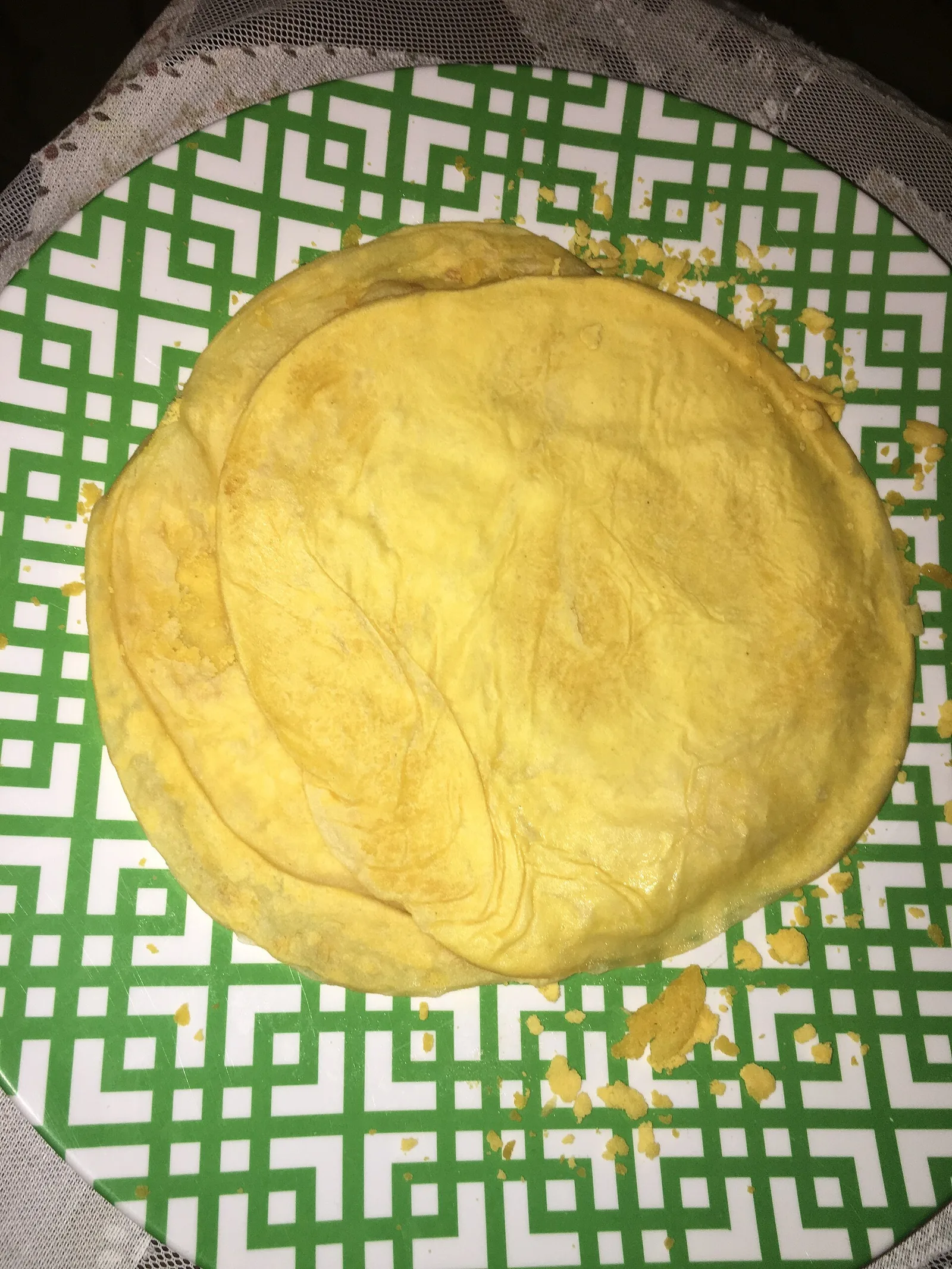
Start with dholl puri, a thin flatbread filled with ground yellow split peas and served with bean curry, rougaille and chutney, sold from stalls and vans everywhere. Try gâteaux piments (chilli lentil fritters), farata (the local paratha), Mauritian biryani, tomato-based rougaille, vindaye (a mustard-turmeric pickle-style fish dish) and octopus curry. Cool down with an alouda, a milky drink with basil seeds and agar. We have left out restaurant name-drops on purpose; for quality, follow the queues at market stalls.
Vegetarian food is easy to find. Dholl puri, farata with vegetable curries, gâteaux piments and pickles are vegetarian by default, and many families keep vegetarian days. Supermarkets stock Indian spices, atta and snacks. For Jain meals, ask about onion and garlic; staff are usually familiar with the request.
What to shop and where
Port Louis Central Market is good for spices, vanilla, tea and snacks; bargain gently at the souvenir stalls. Look for locally made rum, vanilla tea, model ships (a Curepipe and Port Louis craft) and textiles. The Caudan Waterfront has fixed-price shops. Check customs allowances before you carry alcohol back to India.
Currency, exchange and INR conversion
Mauritius uses the Mauritian rupee (MUR). On 9 November 2026, ₹1 was about MUR 0.51 and 1 MUR about ₹1.96 (ExchangeRate-API reference rate; your bank or forex-card rate will differ). Cards are accepted at hotels, supermarkets and most restaurants. Carry cash for buses, markets and street stalls. We’d take US dollars, euros or a multi-currency forex card rather than relying on changing INR on arrival.
These are realistic daily ranges for November 2026. Model your own trip with our budget calculator.
Budget
Comfort
Luxury
Stay
₹2,000–₹4,000
₹5,000–₹10,000
₹18,000–₹45,000
Food
₹1,000–₹1,800
₹2,000–₹3,500
₹5,000–₹10,000
Local transport
₹300–₹800
₹1,500–₹3,500
₹4,000–₹8,000
Activities & entry fees
₹300–₹1,500
₹1,500–₹4,000
₹4,000–₹12,000
Total per day
₹3,600–₹8,100
₹10,000–₹21,000
₹31,000–₹75,000
BuzzyTrip estimates per person per day for November 2026, two people sharing, at about ₹1.96 per Mauritian rupee (ExchangeRate-API reference, 9 Nov 2026; your card or forex rate will differ). Budget means a guesthouse or self-catering studio, street food and public buses; comfort means a mid-range hotel, restaurant meals and a shared hire car or day taxi; luxury means a beach resort, resort dining and private transfers. Flights from India are not included. Prices change; check before you book.
SIM, eSIM and staying connected
The two main mobile networks are my.t (Mauritius Telecom) and Emtel. Both sell tourist SIMs at the airport and in towns (bring your passport). An international eSIM bought before you fly also works. Indian roaming packs exist but are usually pricier. Download offline maps for the south, where signal can drop.
Plugs and voltage
Sockets are Type C (two round pins) and Type G (British three square pins), at 230 V and 50 Hz. Indian Type D plugs won’t fit properly, so pack a universal adapter.
What to avoid: scams and safety
Unlicensed boat and dolphin-trip touts — book licensed operators, and follow rules about keeping your distance from marine life.
Swimming beyond the reef or at Gris Gris — currents can be strong.
Leaving valuables in hire cars or on the sand.
Fake All-in-One Travel Form websites that charge a fee — the official form is free.
Do use reef-safe sunscreen and don’t stand on coral.
Don’t take shells or coral home.
Don’t wear swimwear away from the beach.
Local etiquette
Cover shoulders and knees and remove your shoes at temples, mosques and pagodas, including Ganga Talao. A bonzour (hello in Kreol) and a mersi are always appreciated. Tipping is not compulsory, though rounding up is welcome.
Myth: Indians must apply for a Mauritius visa. Fact: India is visa-exempt; you simply clear immigration with your documents and the All-in-One form.
Myth: Réunion is an easy day trip. Fact: it needs a flight and a French visa.
Myth: Mauritius is only beaches. Fact: it has two UNESCO sites, a national park and crater lakes.
Myth: Everyone speaks only French. Fact: English is widely understood and used in government.
Packing list
Light cotton clothes, swimwear and a rash guard.
A light rain jacket and a layer for the plateau.
Reef-safe sunscreen, a hat and mosquito repellent.
A universal adapter (Type C/G).
Printed hotel booking, return ticket and the All-in-One QR code.
Travel insurance
Buy a policy that covers medical treatment and evacuation, trip disruption from cyclones, and any water sports you plan, such as snorkelling, diving or boat trips.
Comparing December options? Our best December trips outside India guide sets Mauritius against the Maldives, Thailand and the Gulf, with weather normals and visa notes for Indians.
Frequently asked questions
Do Indian passport holders need a visa for Mauritius?
No visa is needed in advance for a tourist trip. Mauritius lists India among visa-exempt countries, and immigration grants a stay on arrival — commonly up to 60 days (India’s High Commission cites up to 90). Carry a passport valid at least six months, a return ticket, a hotel booking and proof of funds, and fill in the free All-in-One Travel Form and Health Declaration on safemauritius.govmu.org before you fly.
Is November a good month for Mauritius?
Yes, for most trips. November is the start of the warmer summer season, with coastal highs usually around 27–29 °C. It is still one of the drier months before the wetter January–March period. The cyclone season officially runs from November to April but peaks from January to March, so check the Mauritius Meteorological Services forecast before boat trips.
How long is the flight from India?
Nonstop flights from Mumbai take roughly six to six and a half hours. Air Mauritius flies nonstop from Mumbai several times a week and less often from Delhi and Chennai, and Air India also has nonstop services. Mauritius is 1.5 hours behind IST.
What is the currency, and how much is ₹1 worth?
The Mauritian rupee (MUR). On 9 November 2026, ₹1 was about MUR 0.51, so 1 MUR is about ₹1.96 (ExchangeRate-API reference). Cards work at hotels and larger shops; carry cash for buses, markets and street food.
Can we get vegetarian and Indian food easily?
Yes. About two-thirds of Mauritians have Indian roots, and dholl puri, farata, vegetable curries, gâteaux piments and biryani are everyday food. Vegetarian options are easy to find, and supermarkets stock familiar Indian groceries.
Which plugs does Mauritius use?
Type C and Type G sockets, at 230 V and 50 Hz. Indian three-pin (Type D) plugs won’t fit, so bring a universal adapter.
Can we do Réunion or Rodrigues as a day trip?
No. Rodrigues is about 1.5 hours away by air and needs at least two nights. Réunion needs a flight and, for Indian passport holders, a French visa for the overseas department, so it is not a casual day trip.
Is Mauritius safe?
Generally, yes, but watch for petty theft at beaches and in Port Louis. Swim only where it is safe and follow beach flags. Use licensed boat operators. For emergencies, dial 999 for the police or 114 for an ambulance (SAMU).
Sources and credits
We checked prices, permits, visas and routes against the official pages below in November 2026. Background facts also come from the Wikimedia pages listed, used under Creative Commons Attribution-ShareAlike. This guide is an original work written and edited for BuzzyTrip; fees, visa rules and timetables change, so verify before you travel.
Been here recently? Share a tip (and a photo) in the comments below and tick “This is a travel tip”. Tips are reviewed before they appear — we never show your email.
















4 comments